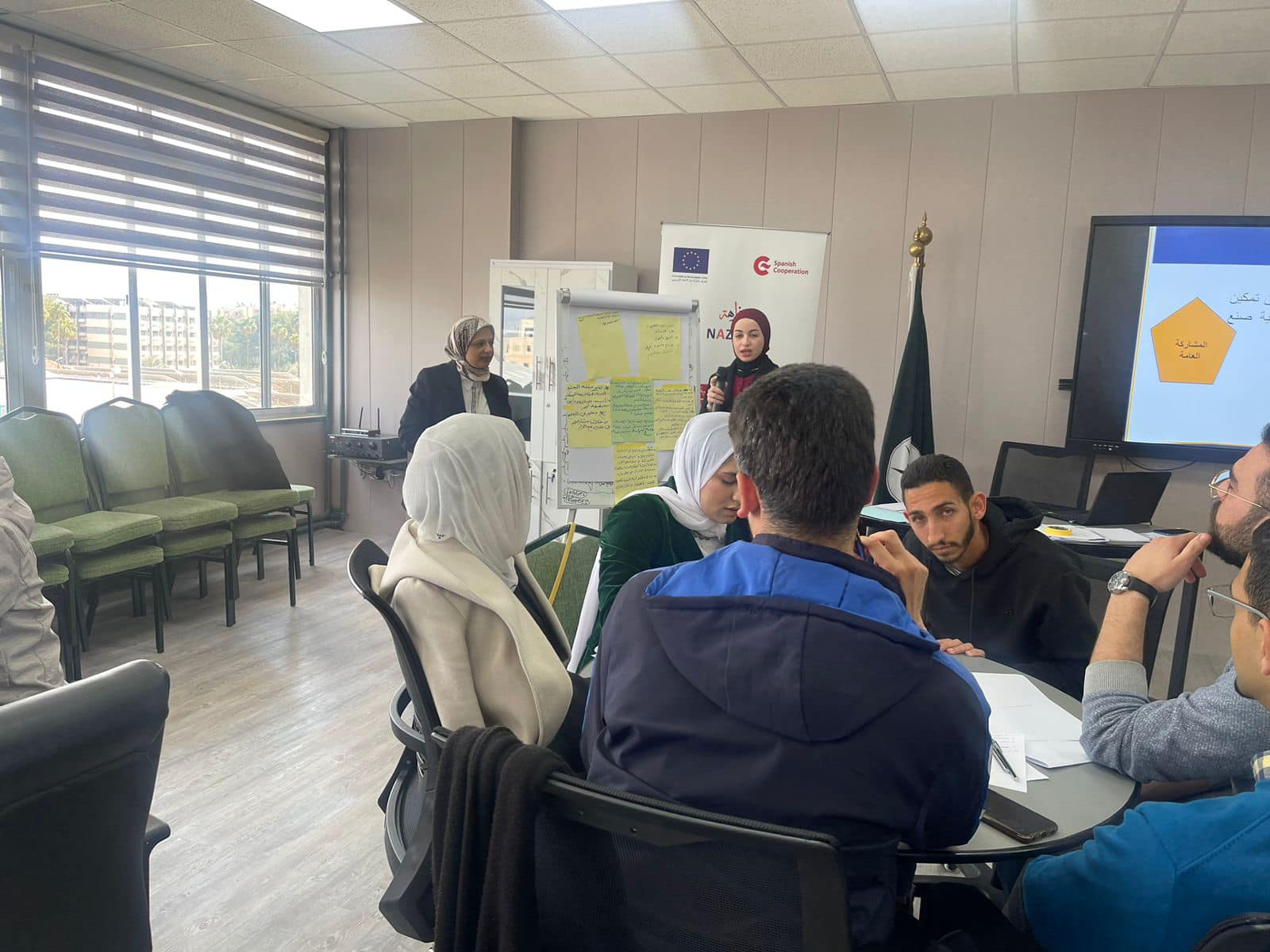
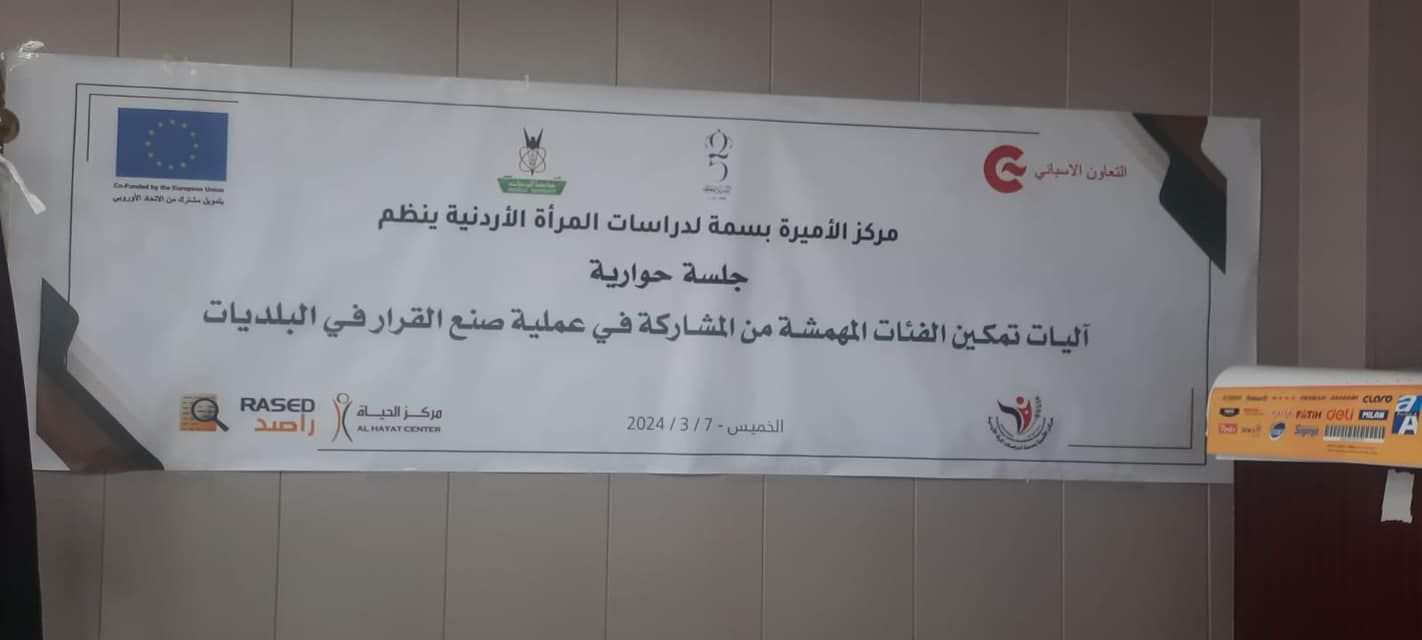
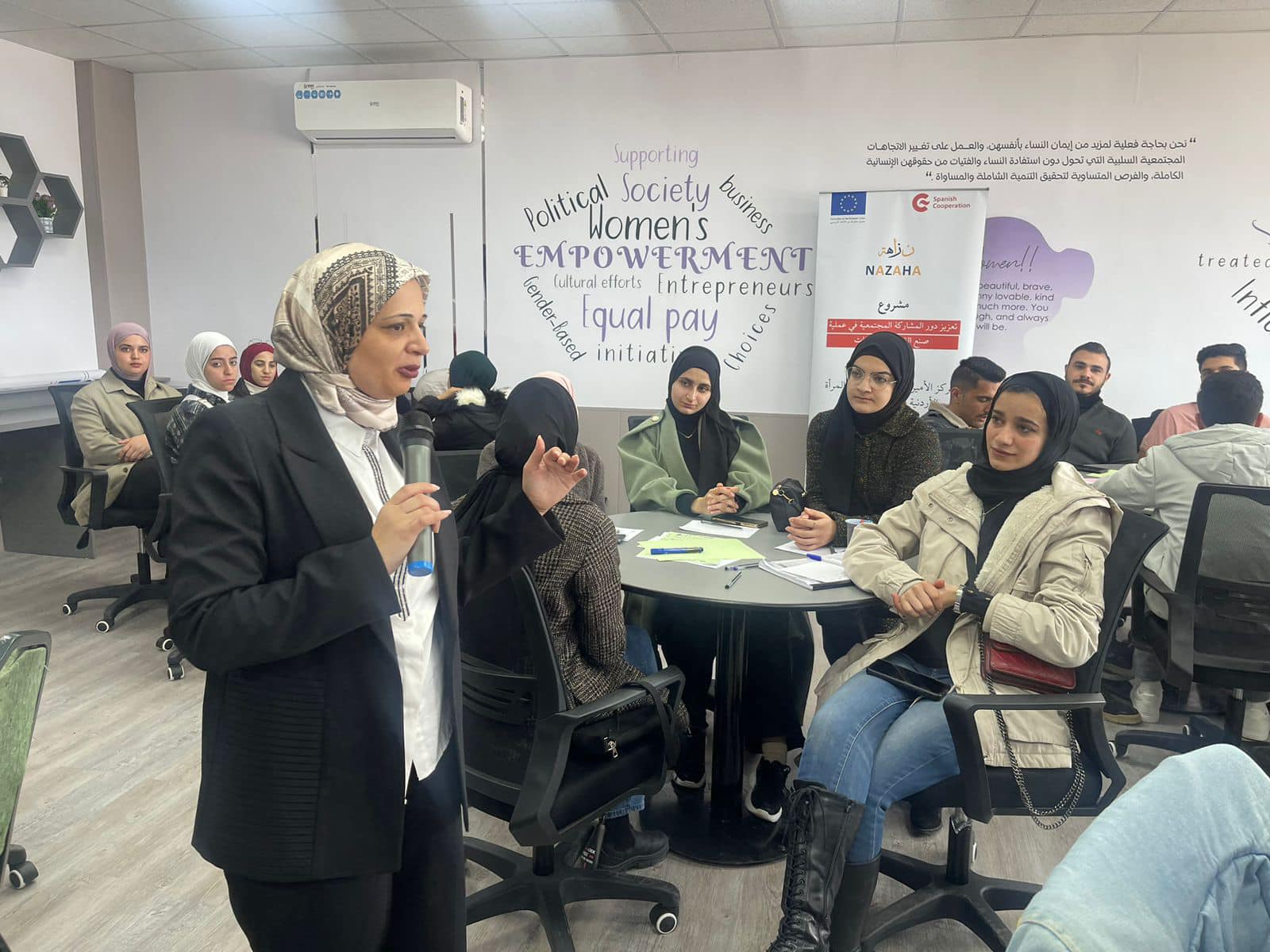
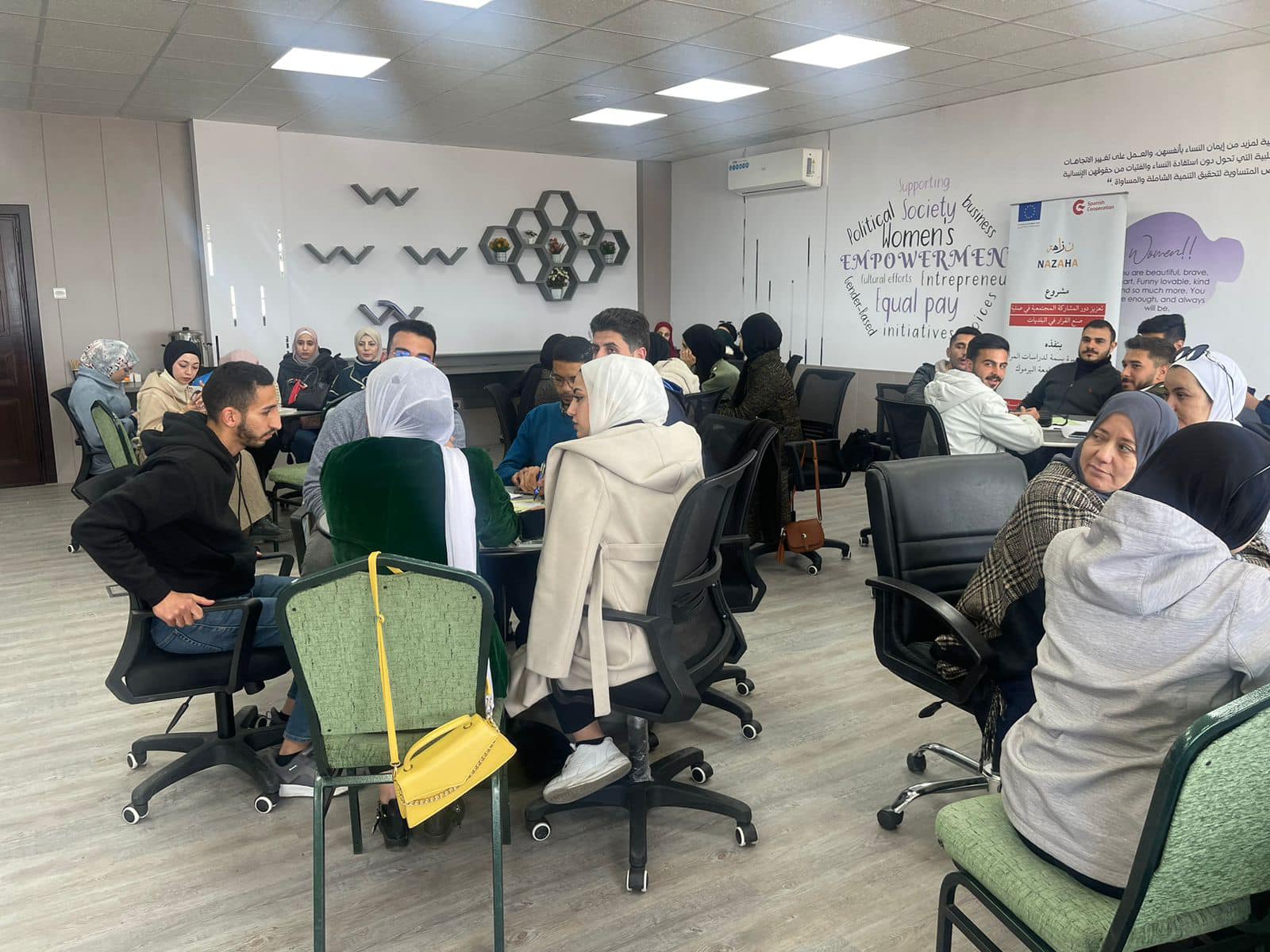
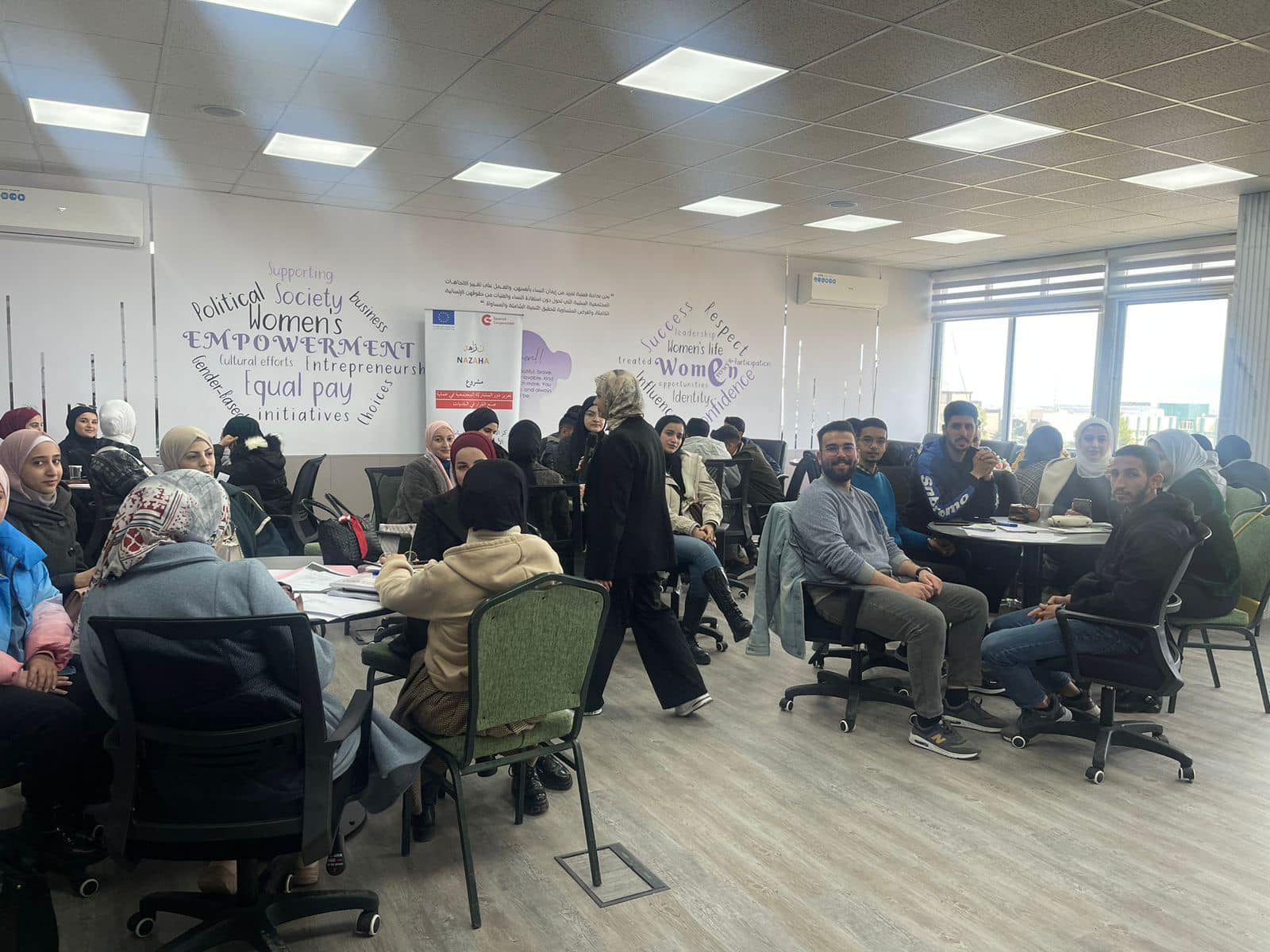
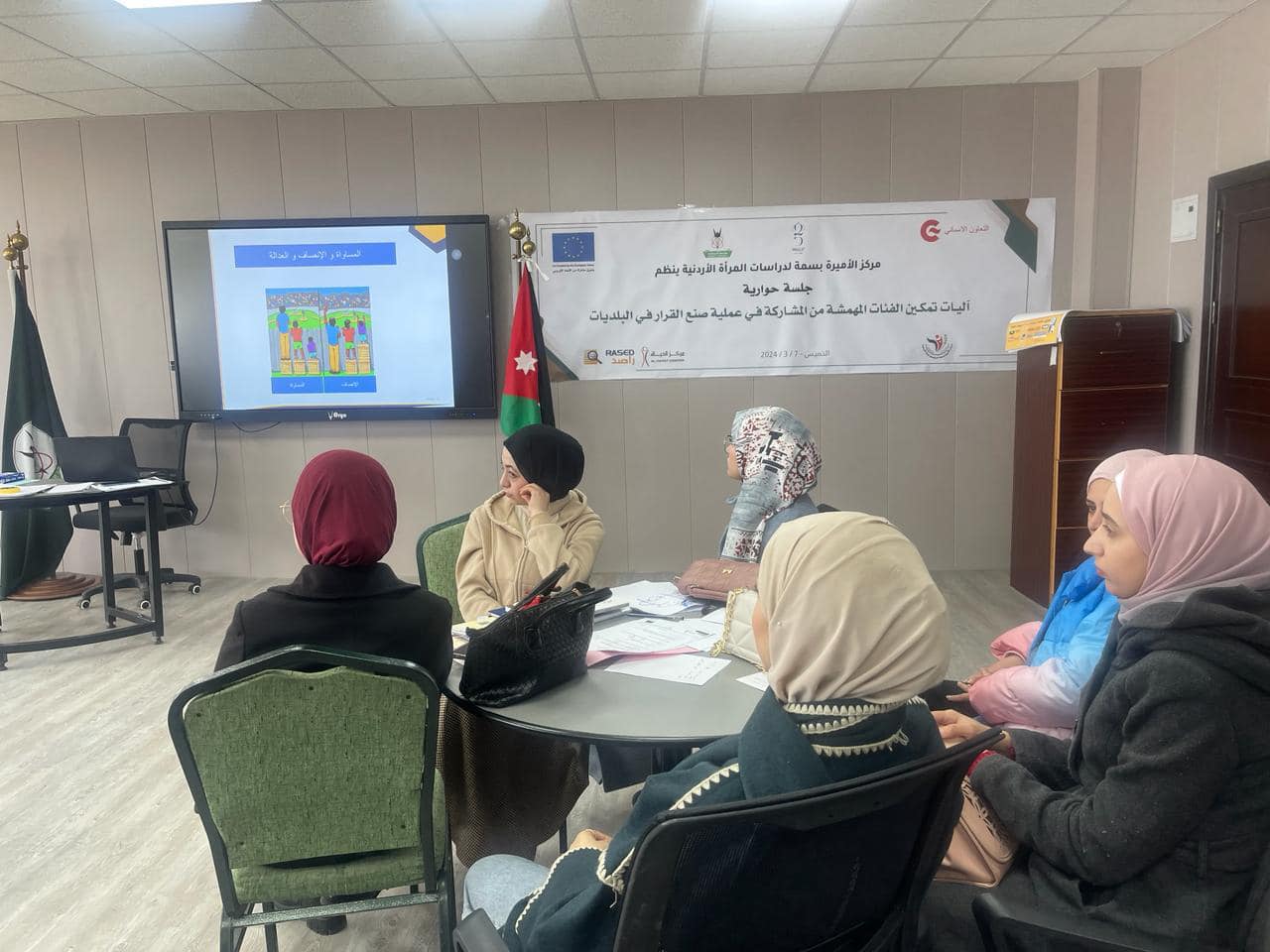
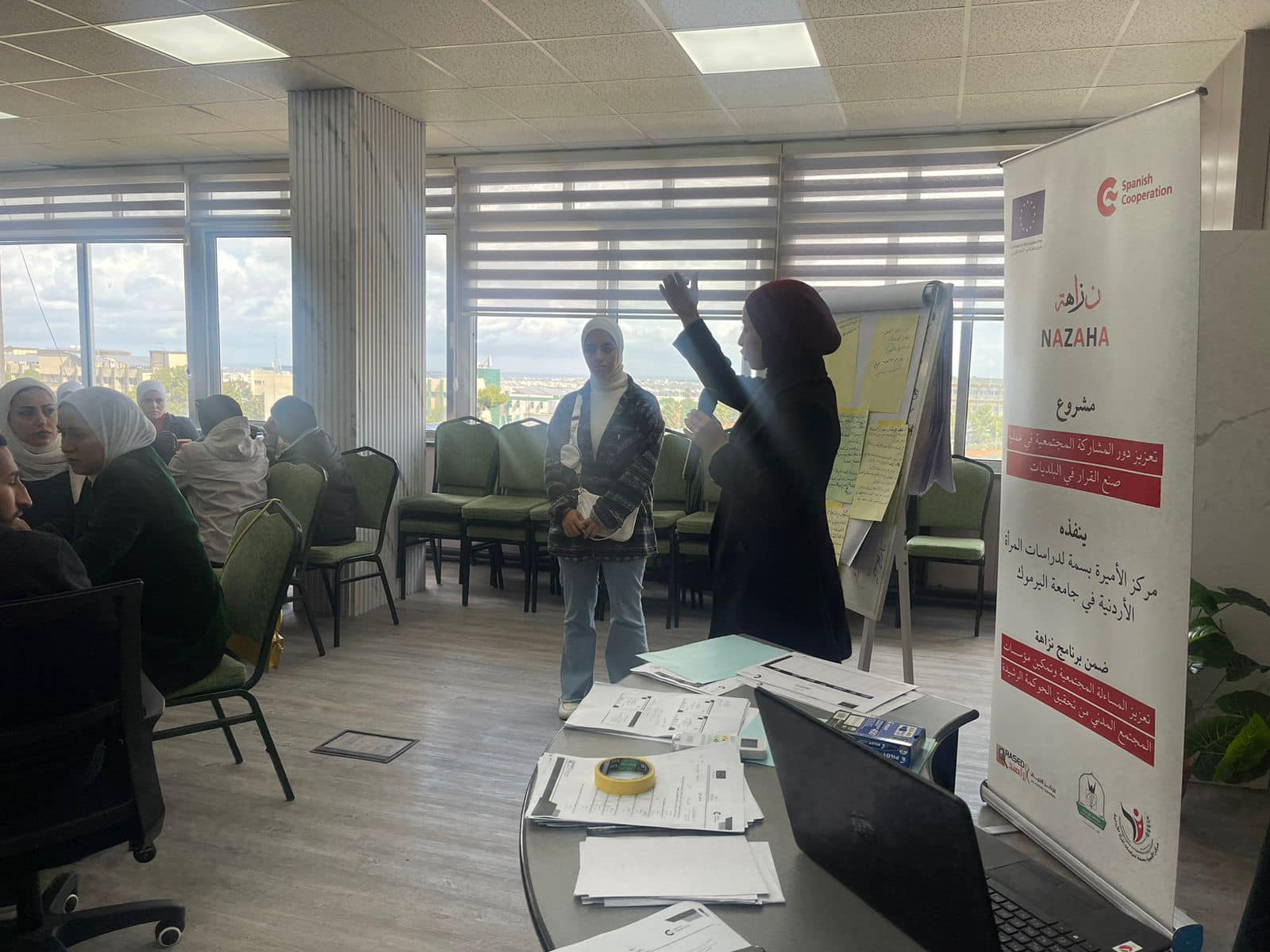
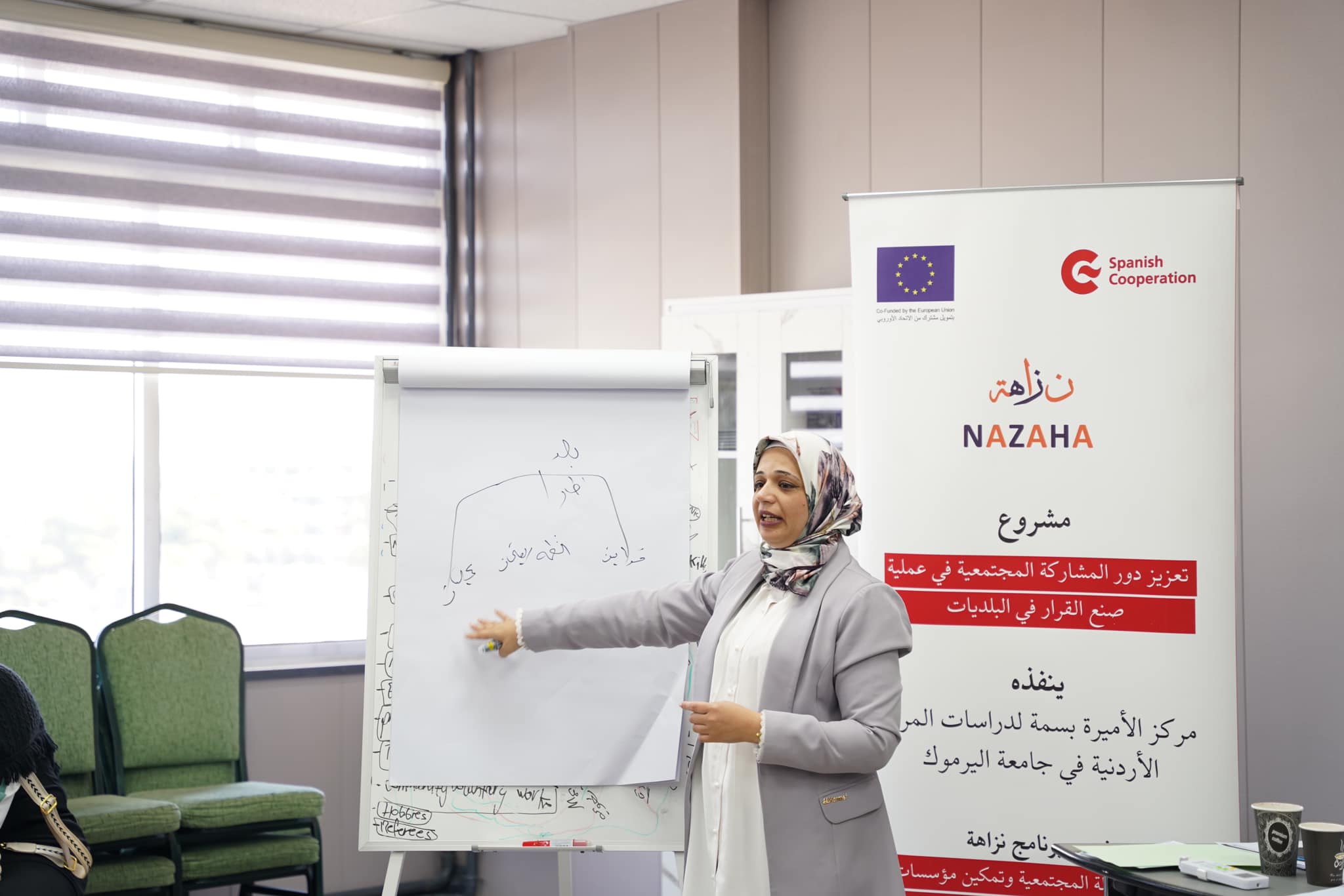
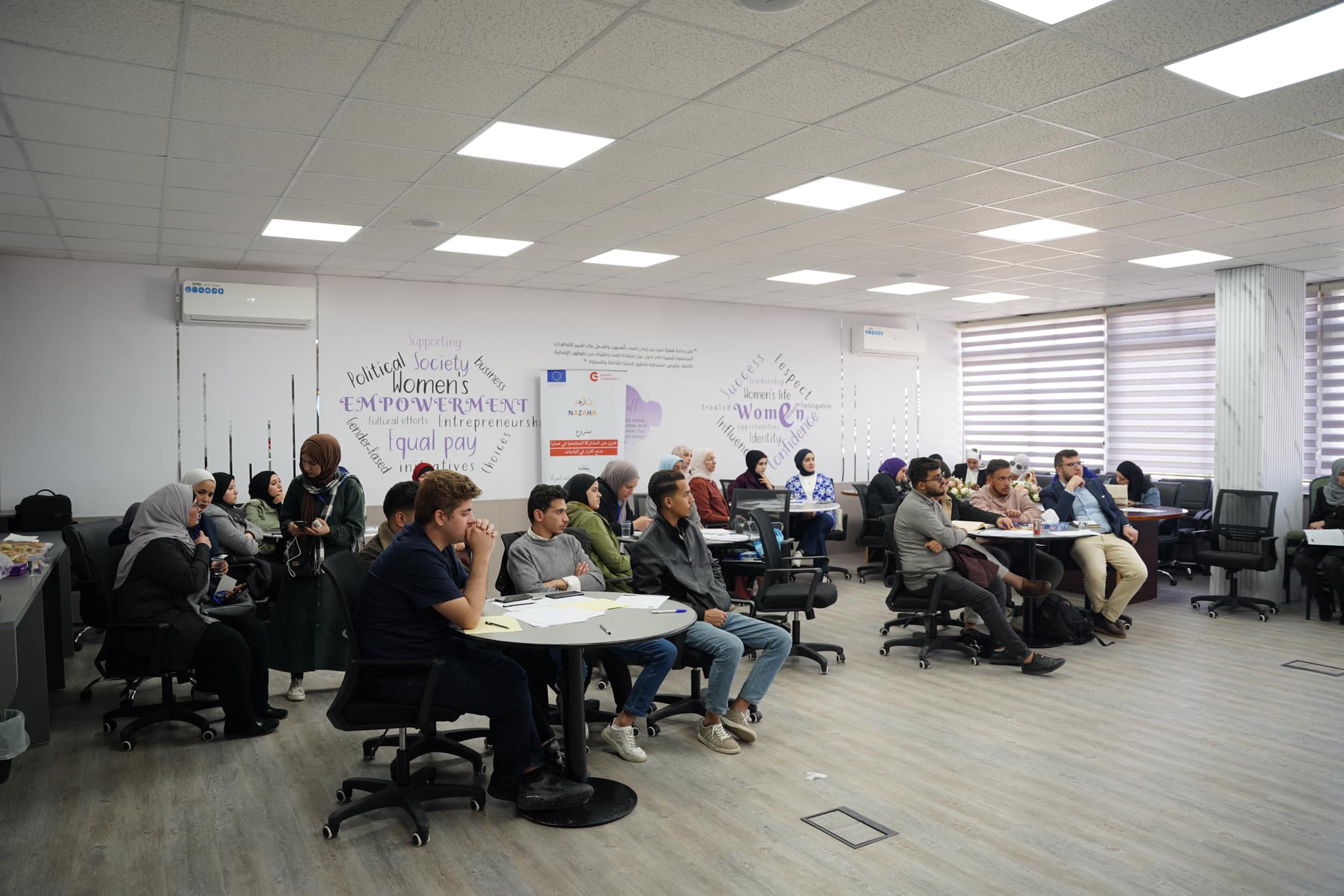
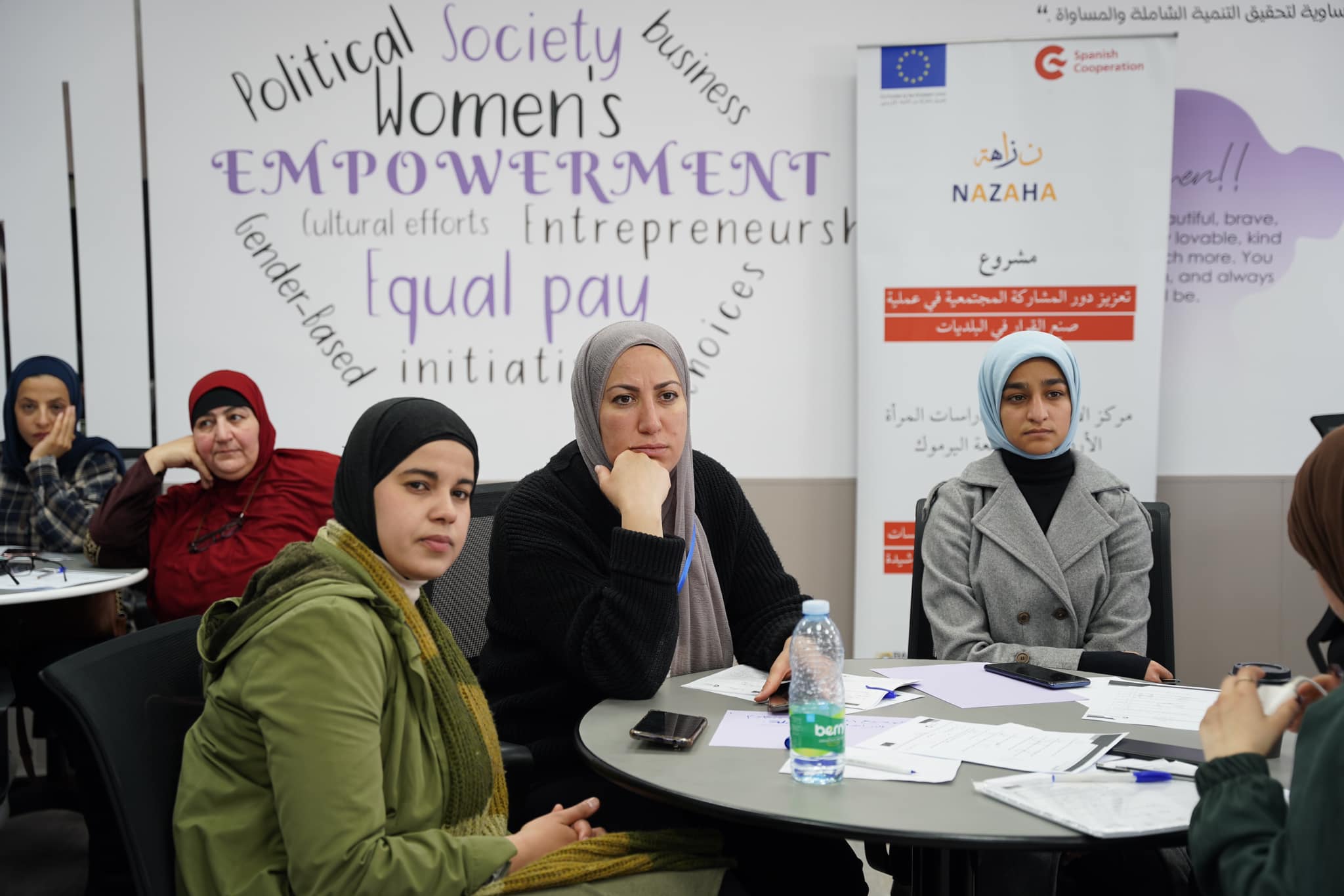
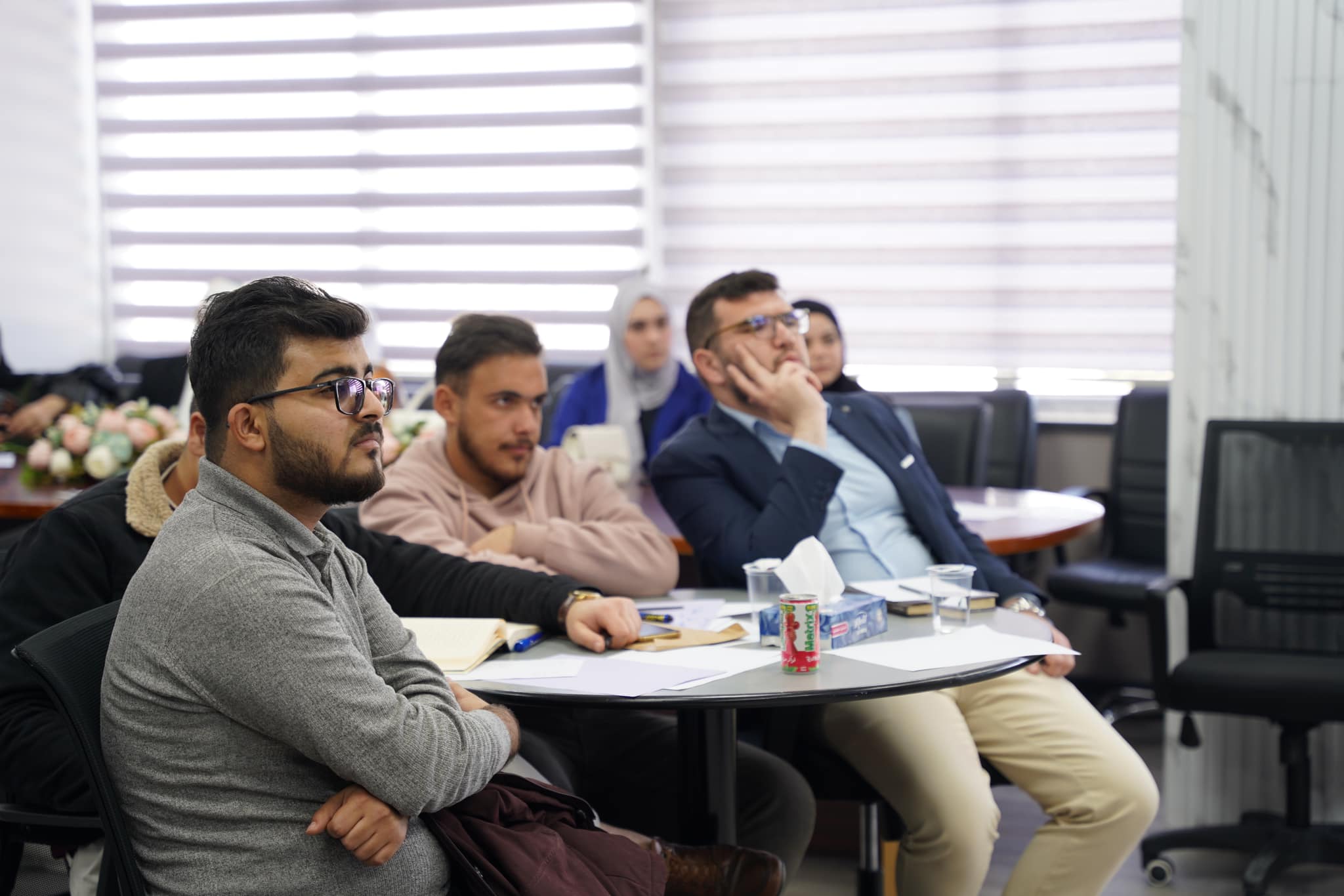
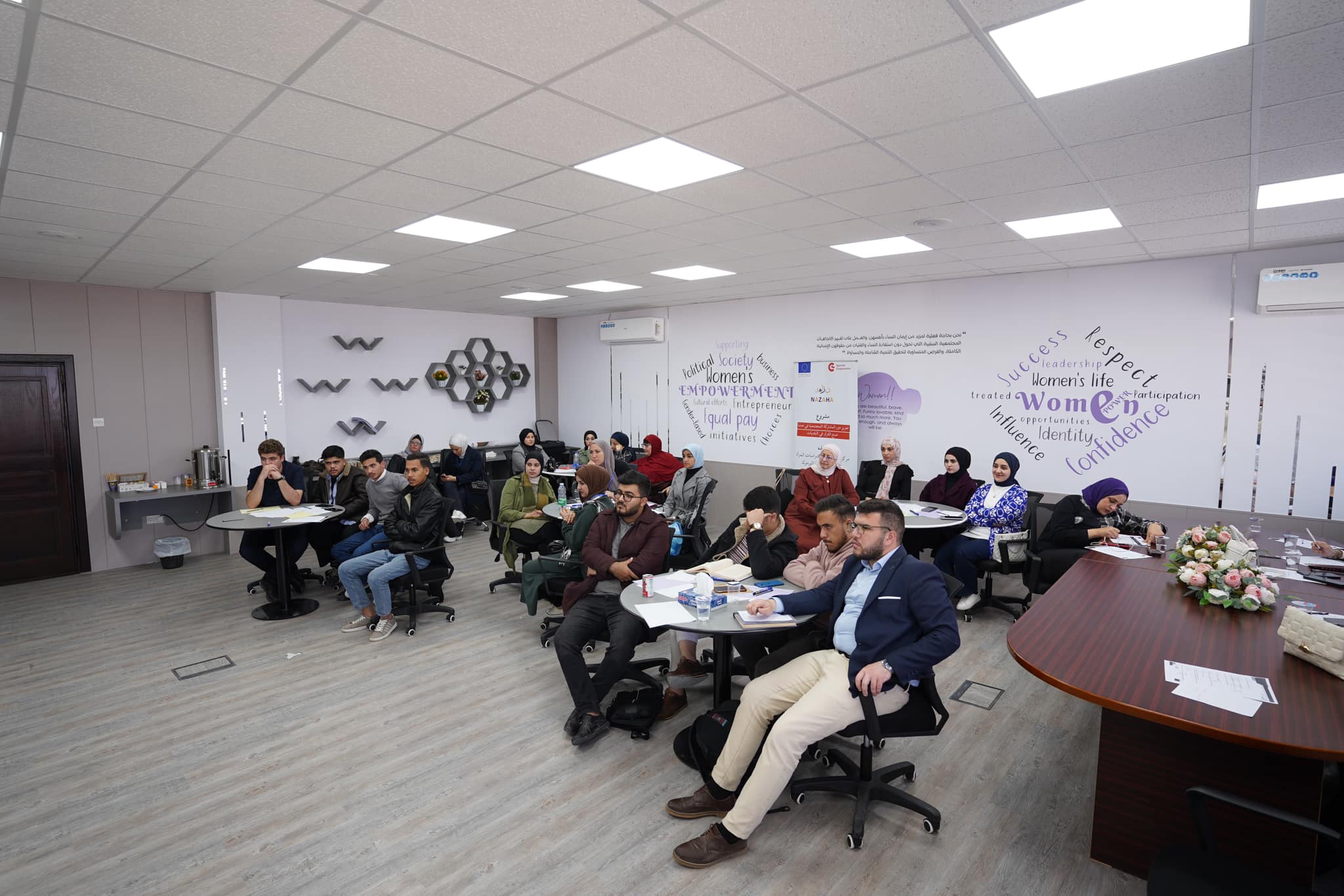
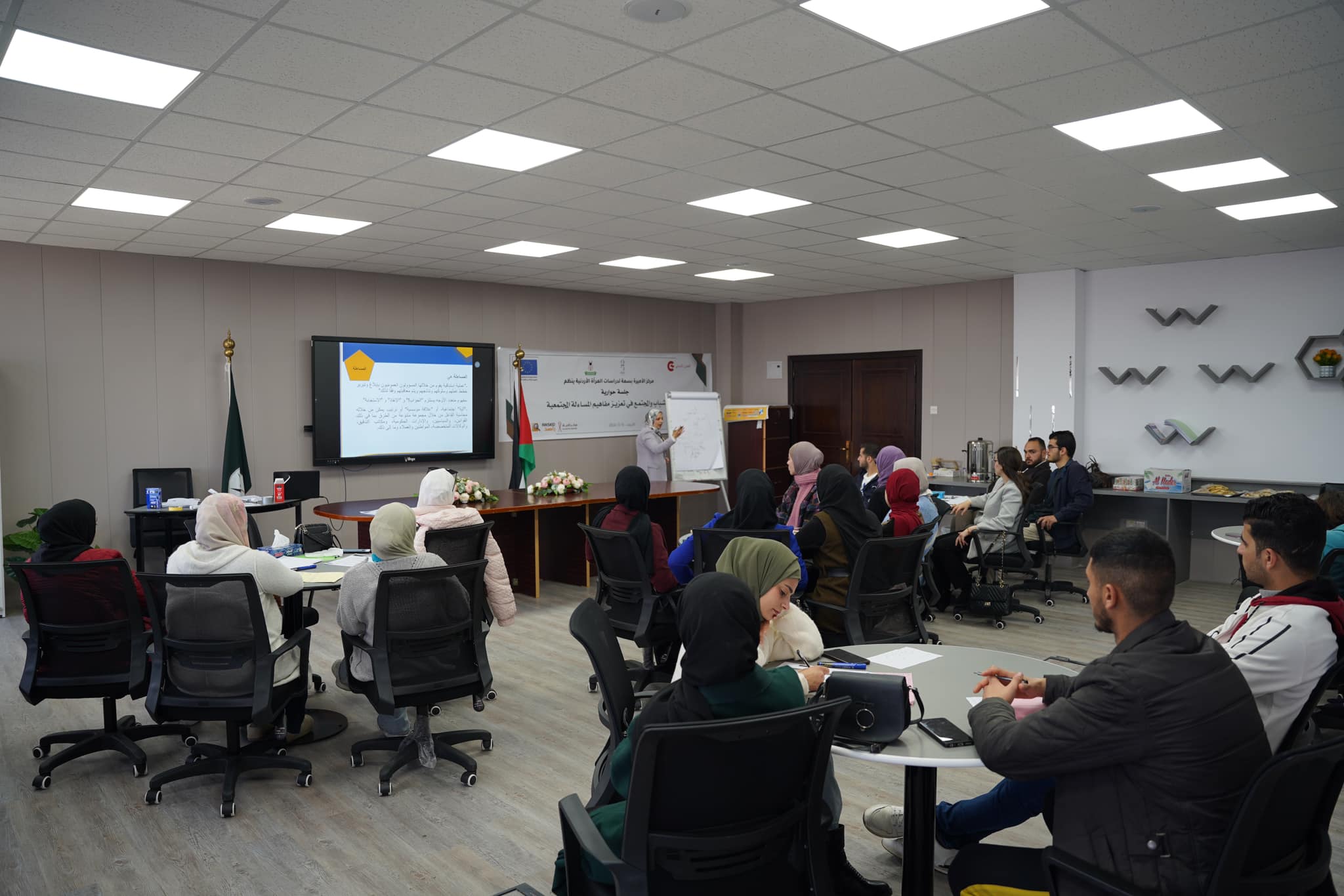
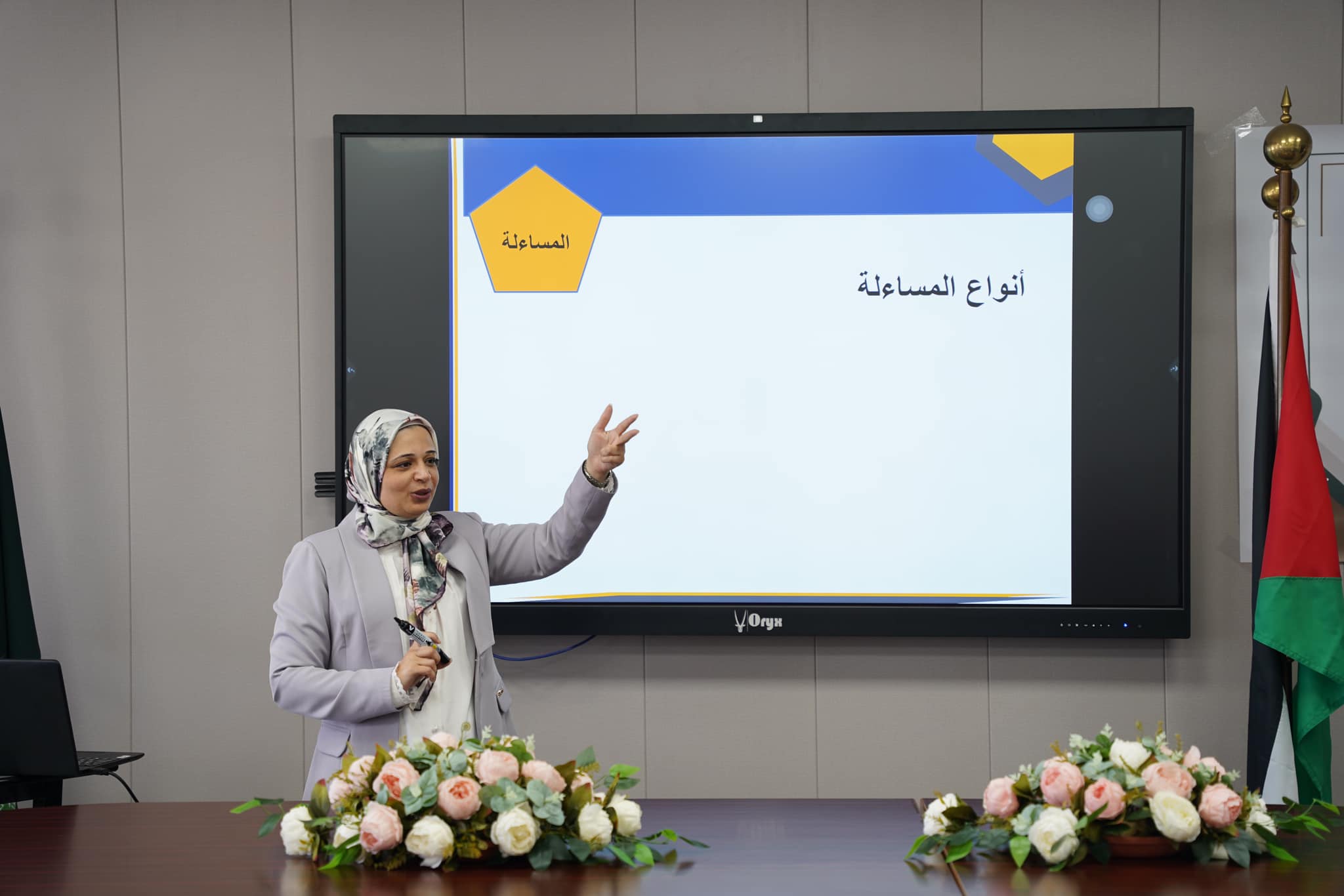
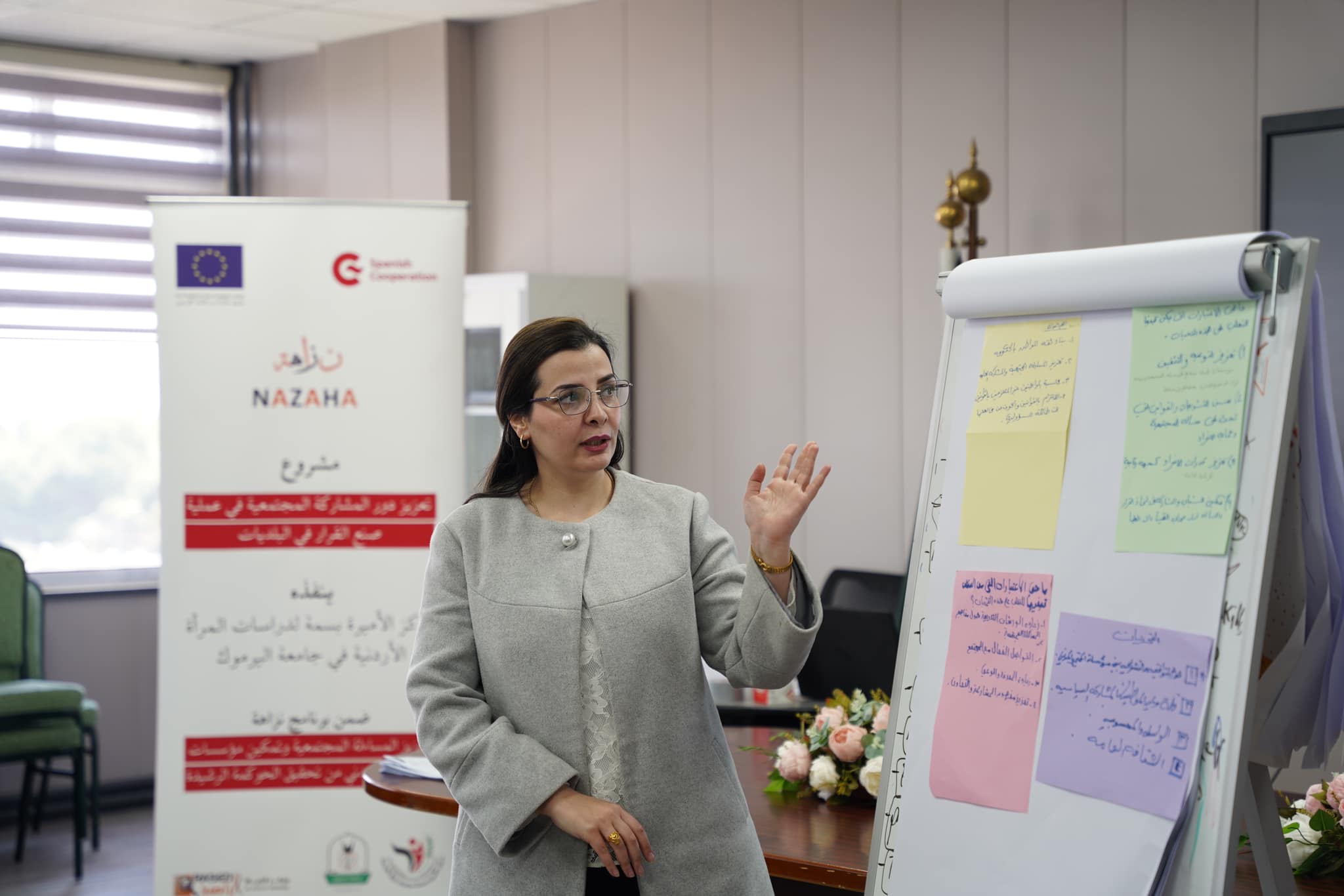
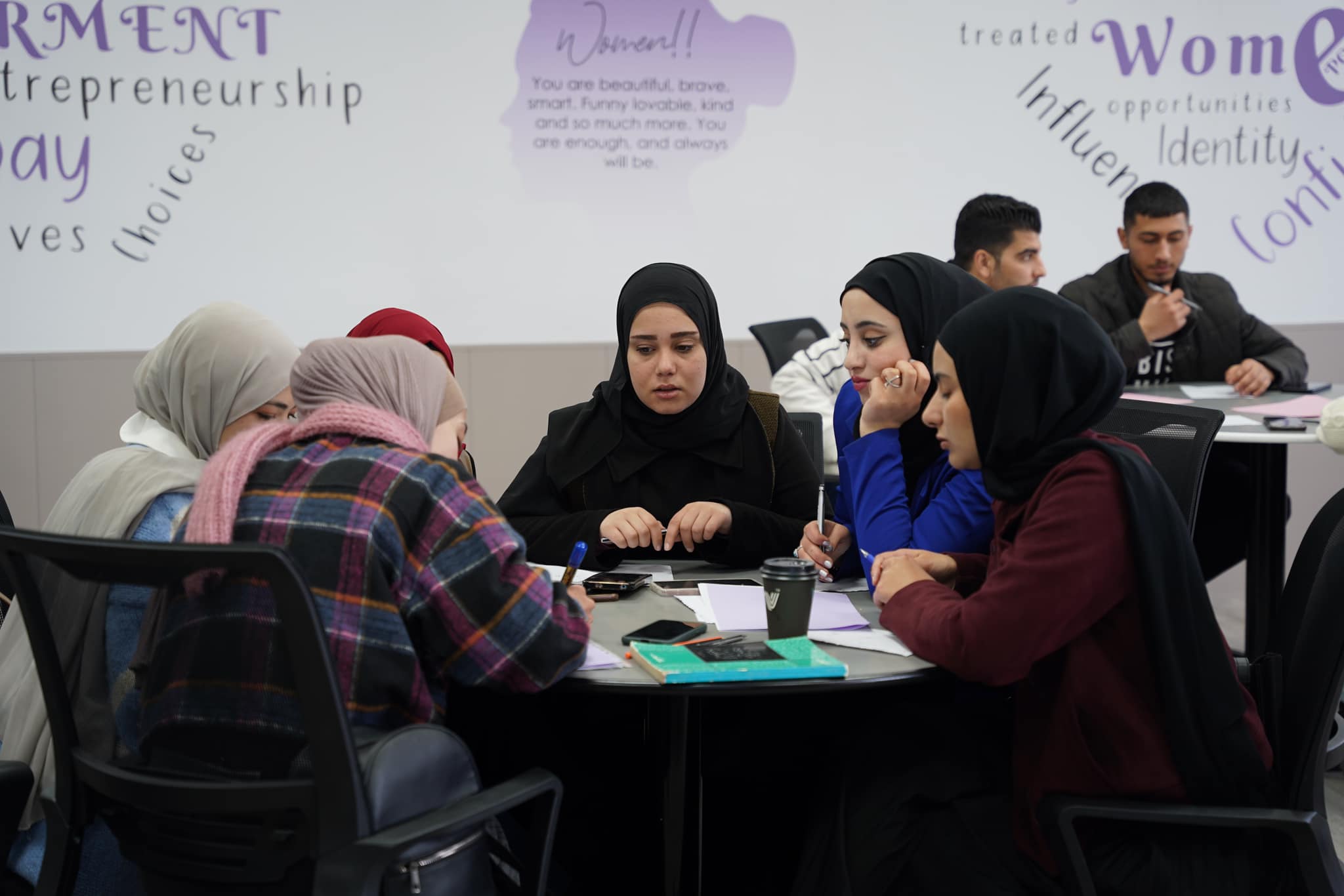
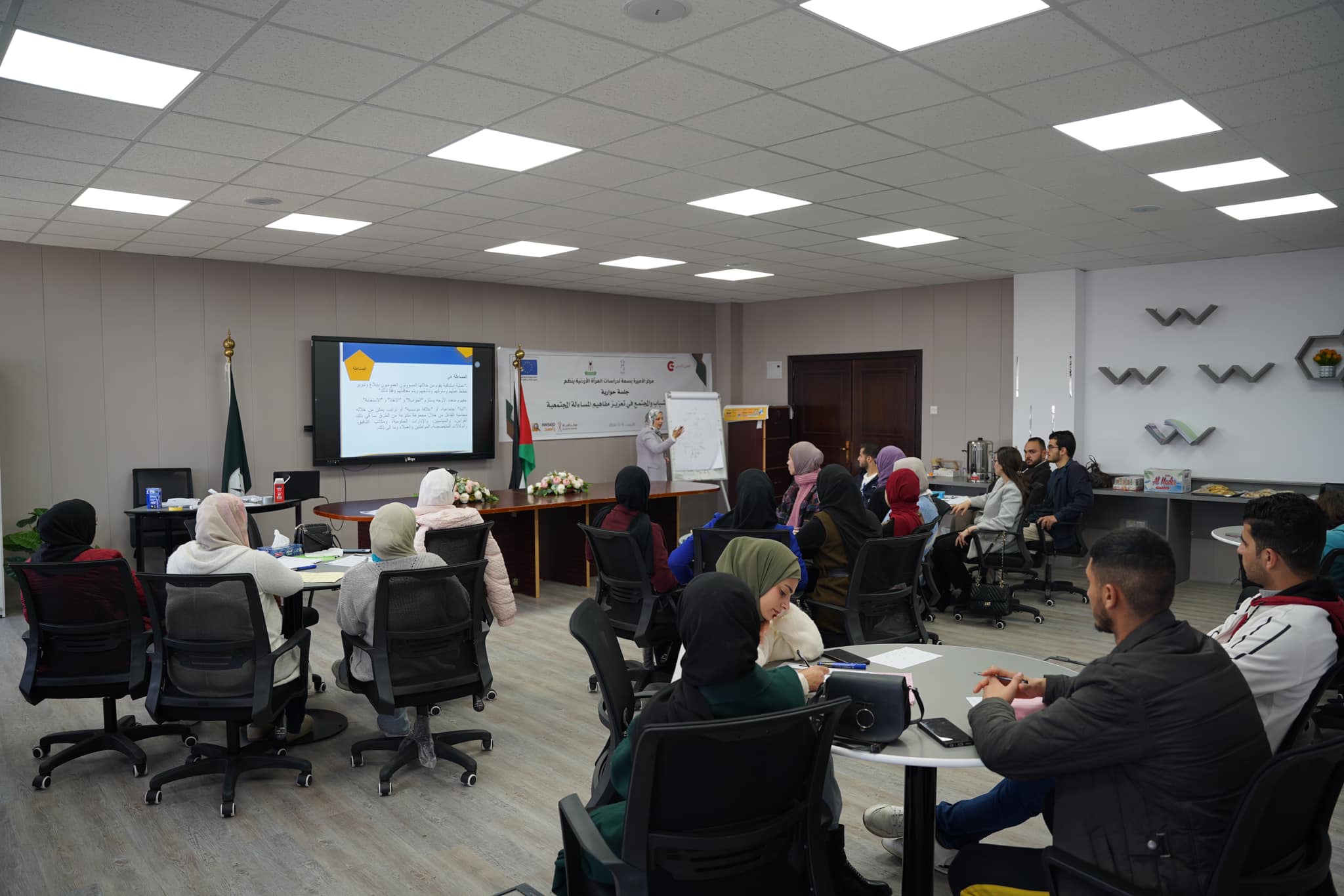
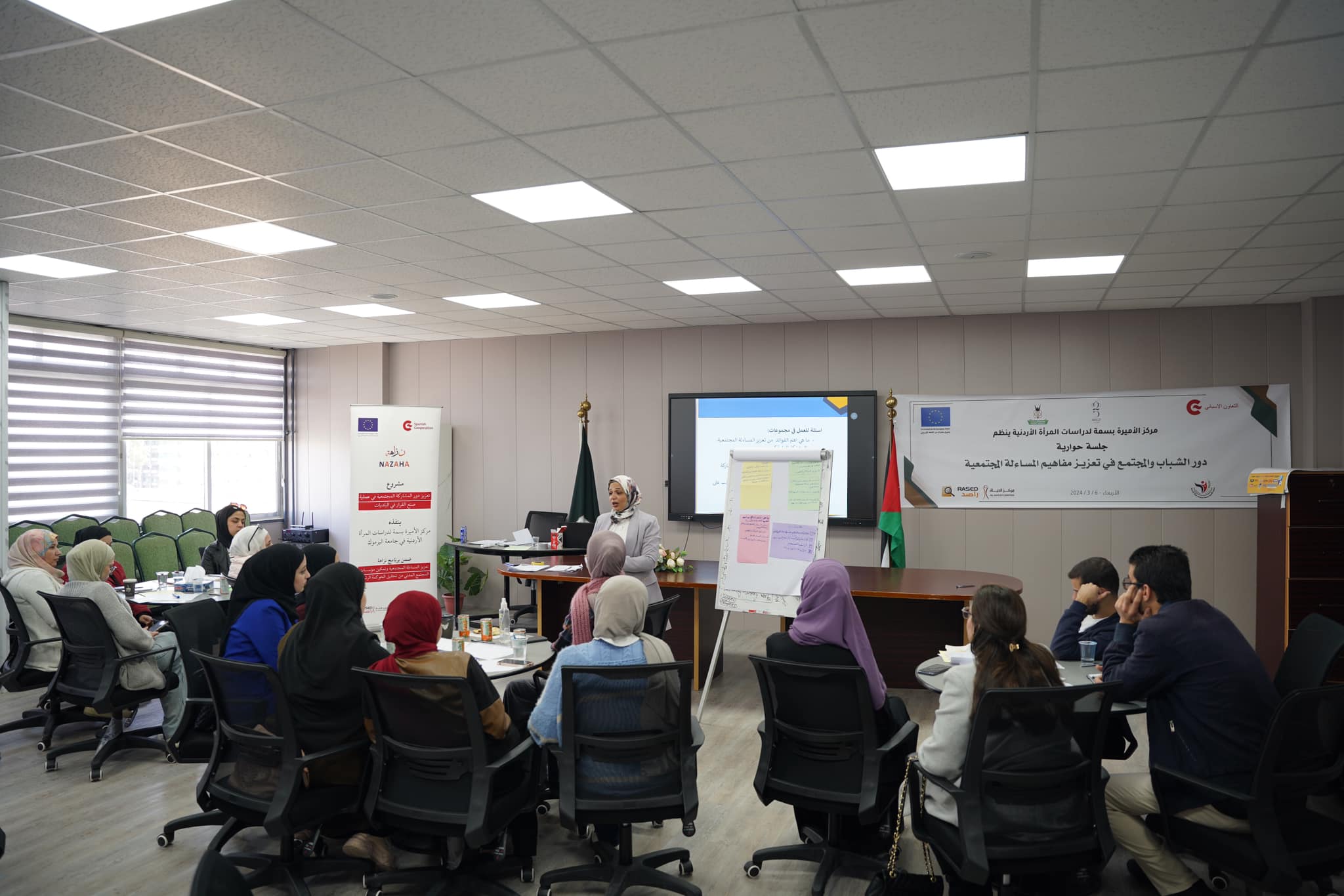
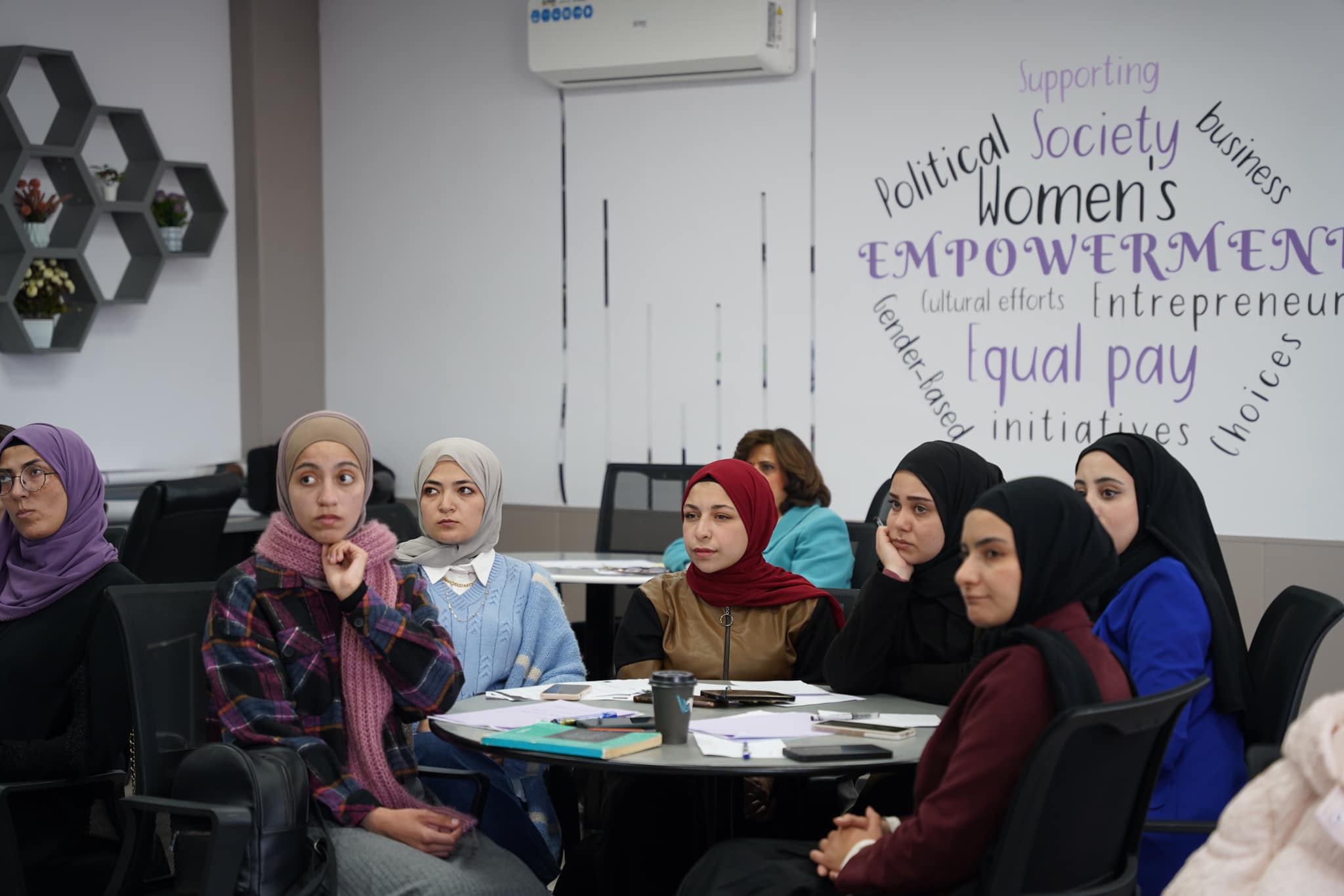
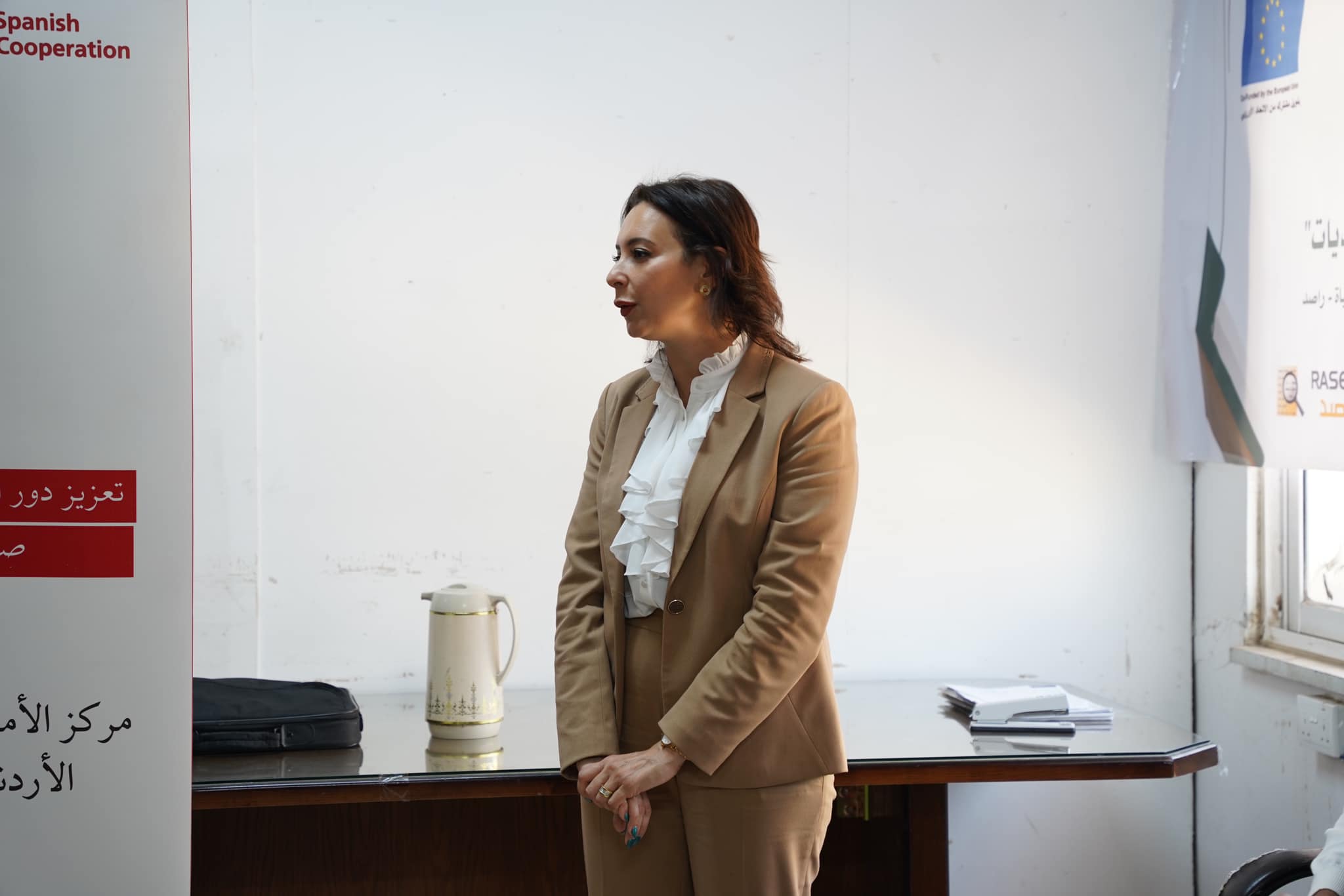
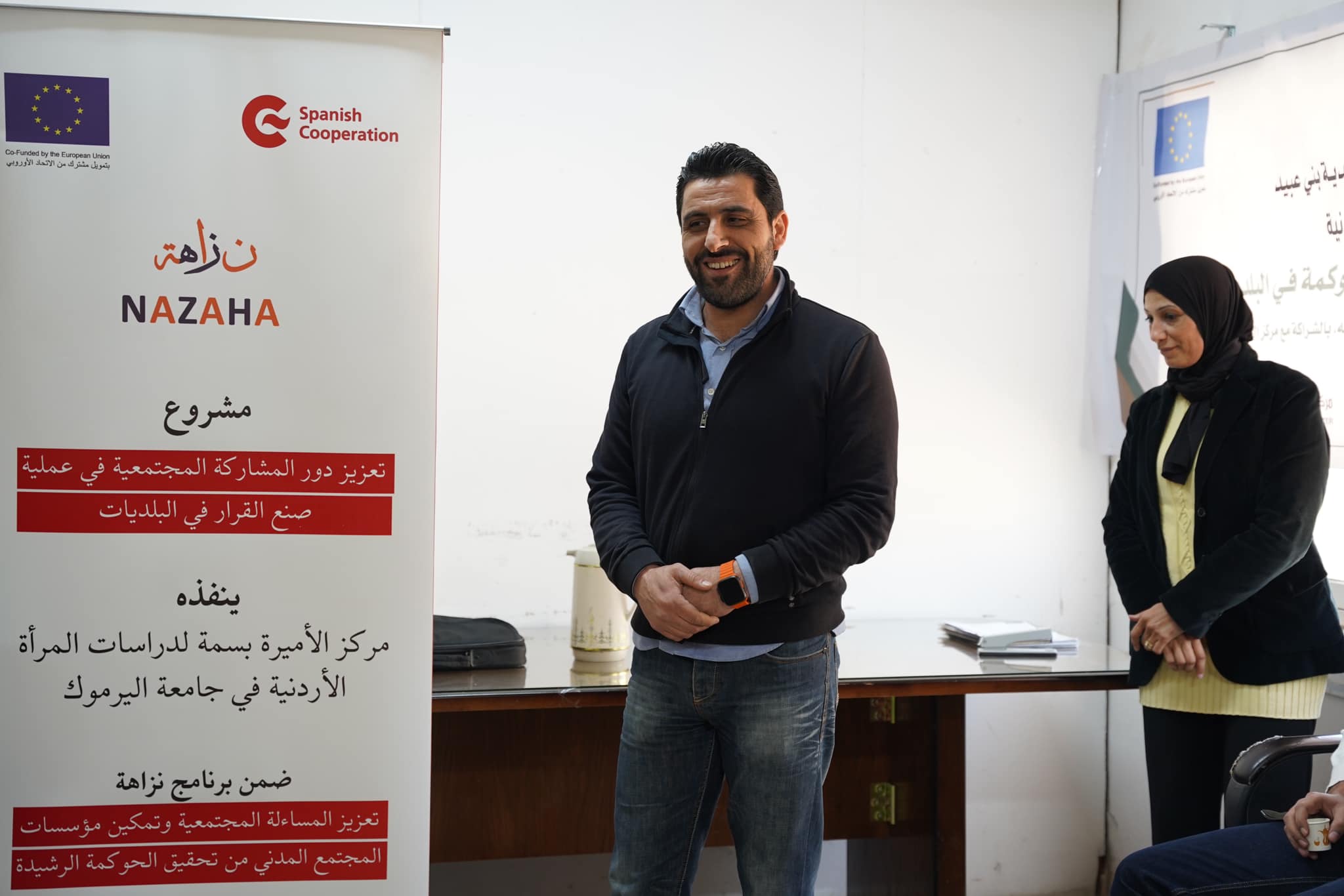
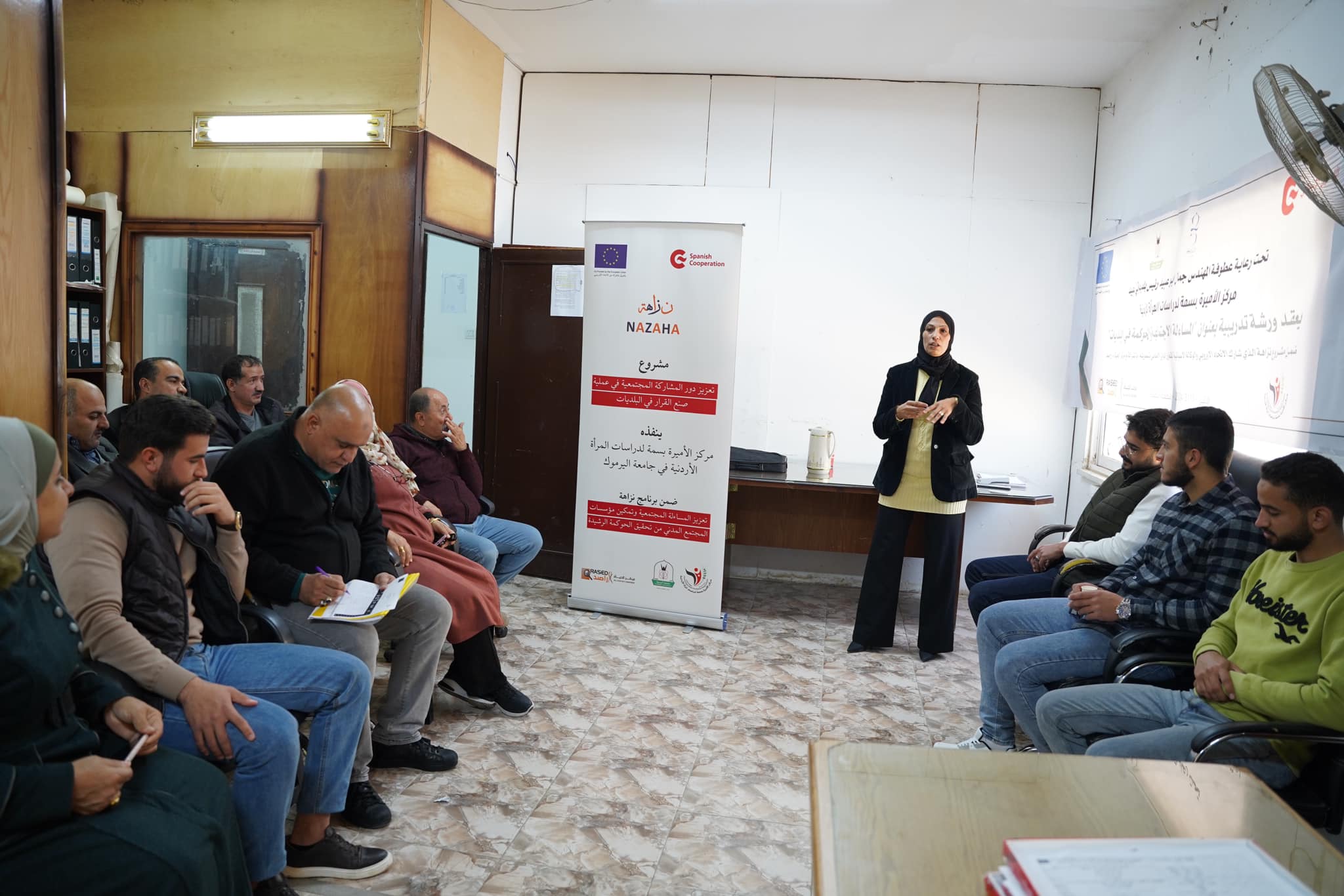
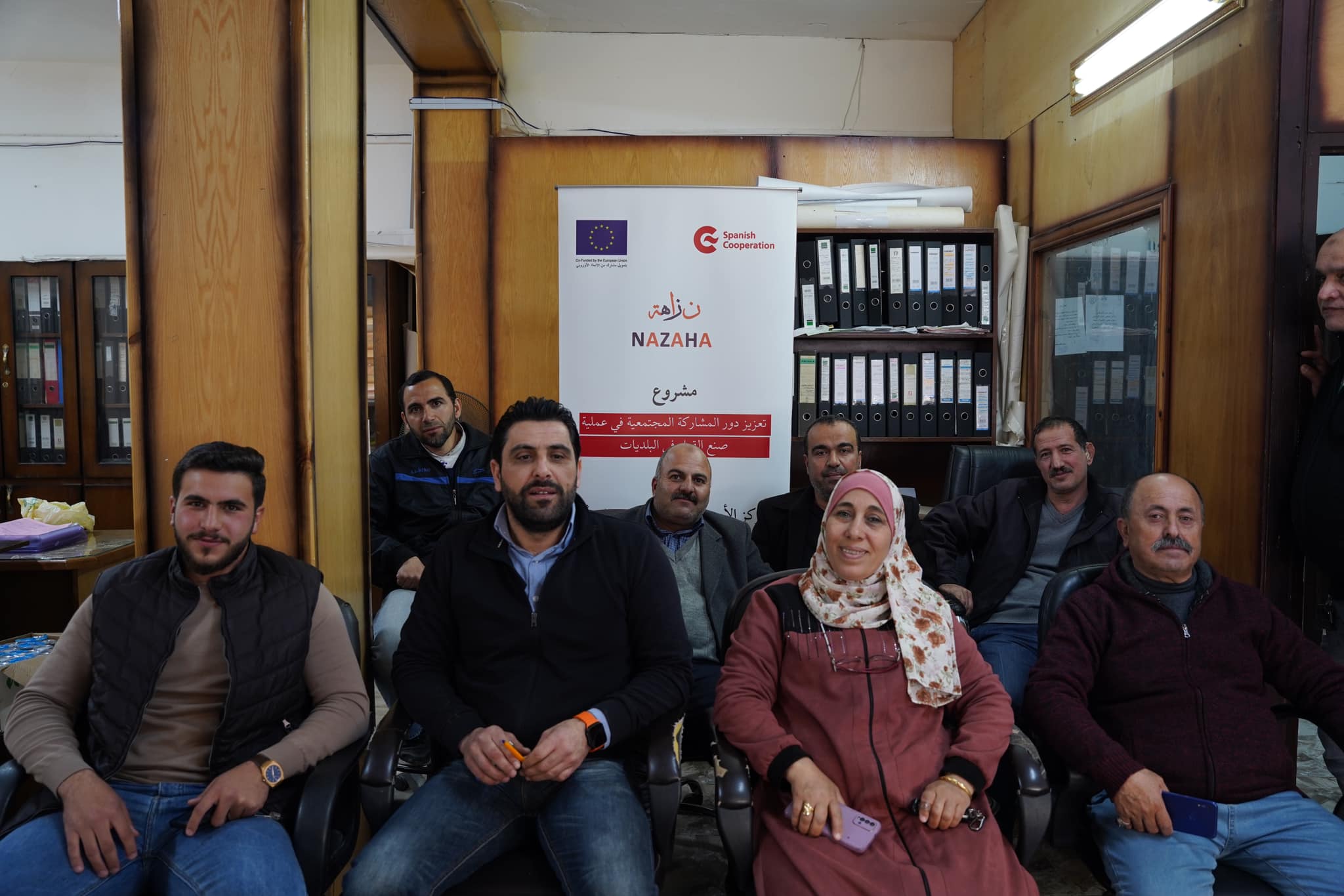
The Princess Basma Center for Jordanian Women's Studies at Yarmouk University, in collaboration with the Al-Hayat Rased Center and with funding from the Spanish Agency for International Cooperation and the European Union, organized an awareness session titled "Mechanisms for Empowering Marginalized Groups to Participate in the Decision-Making Process in Municipalities." This session was part of a larger project aimed at improving community accountability and the ability of civil society institutions to achieve good governance.
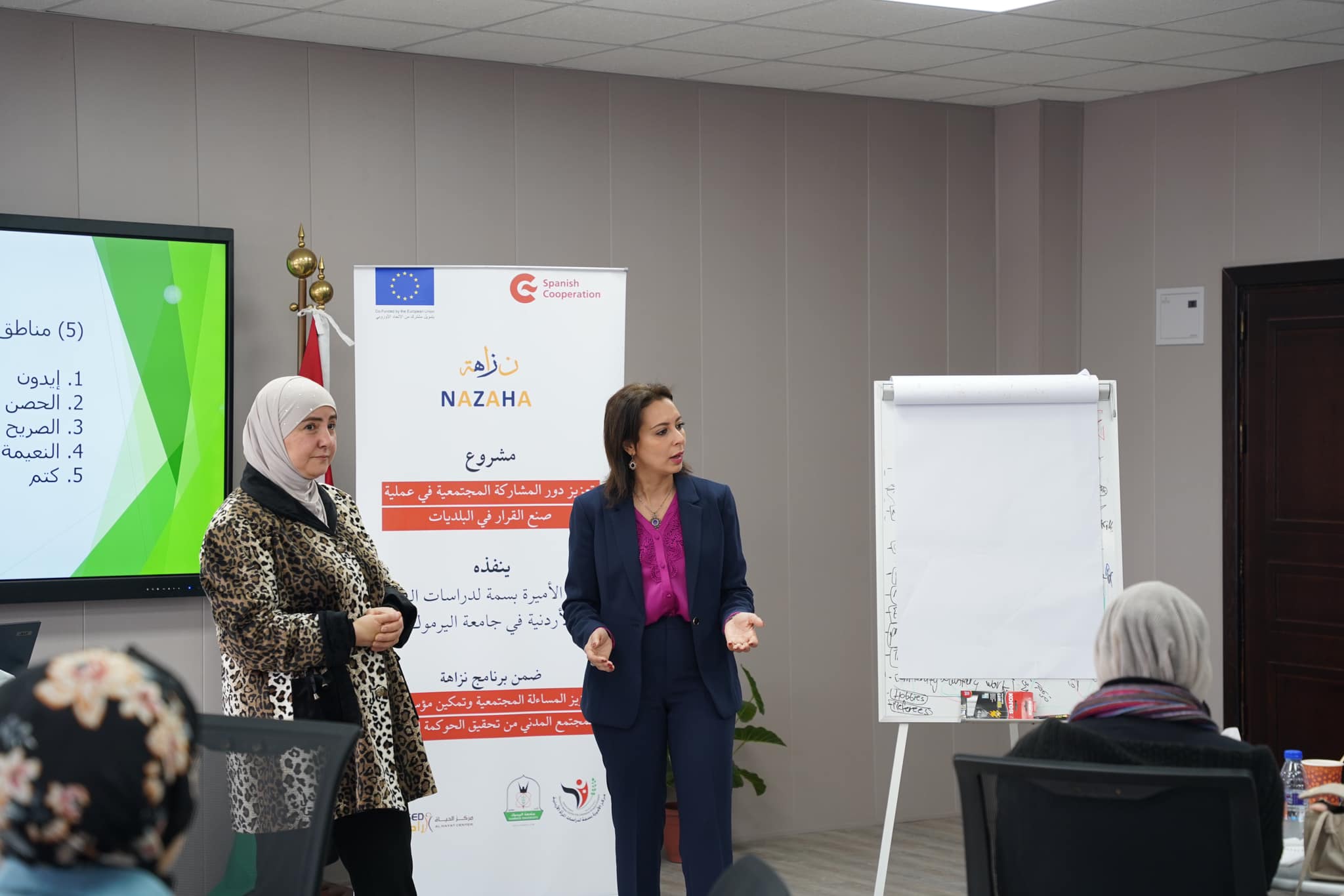
With support from the European Union and the Spanish Cooperation Agency, the Princess Basma Center for Jordanian Women's Studies at Yarmouk University organized an awareness session on Wednesday, 3/6/2024, in collaboration with the Al-Hayat Rased Center.
The Princess Basma Center for Jordanian Women's Studies at Yarmouk University partnered with the Al-Hayat Rased Center and received funding from the European Union and the Spanish Agency for International Cooperation to implement this program, which aims to improve civil society institutions' ability to achieve good governance and increase societal accountability.
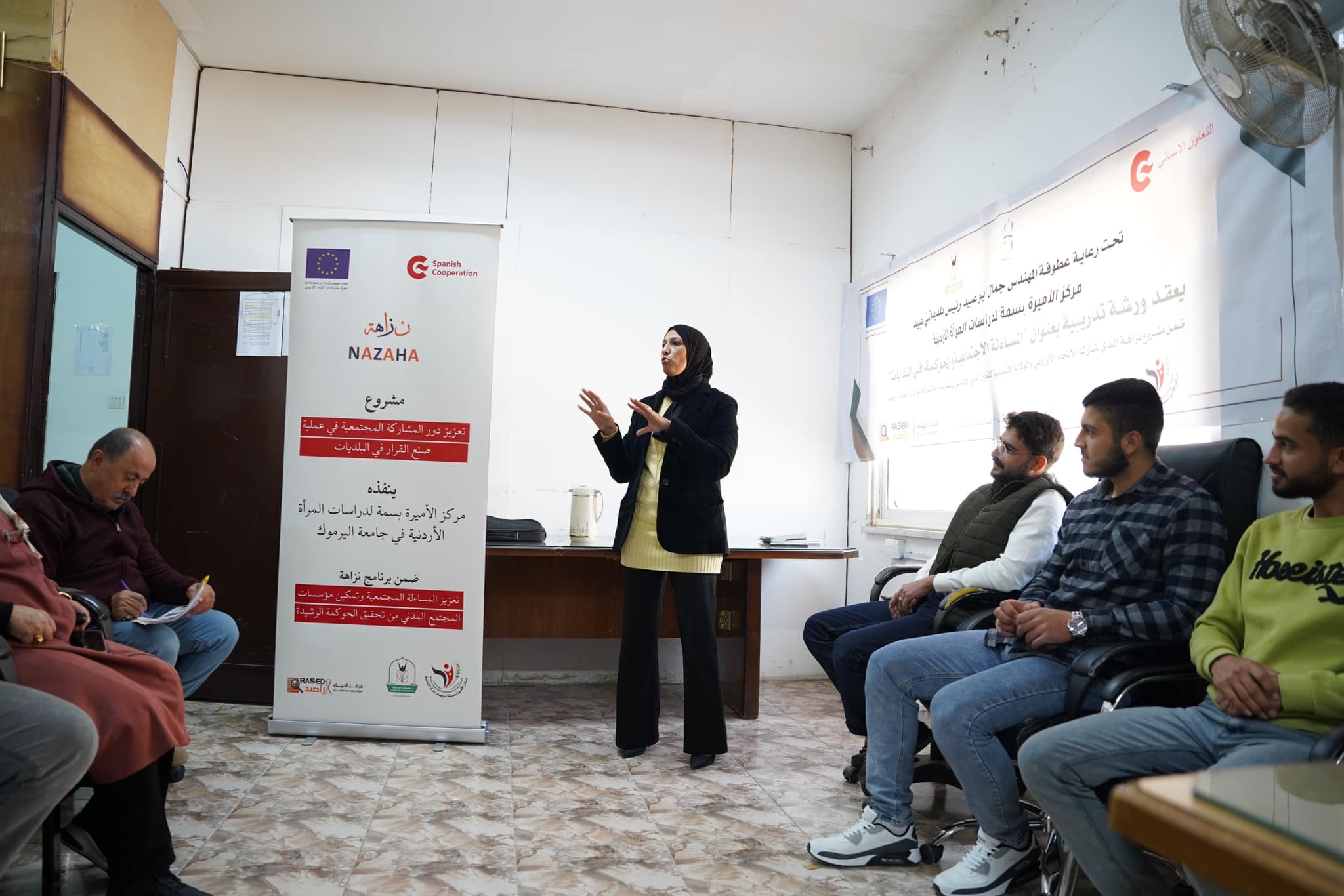
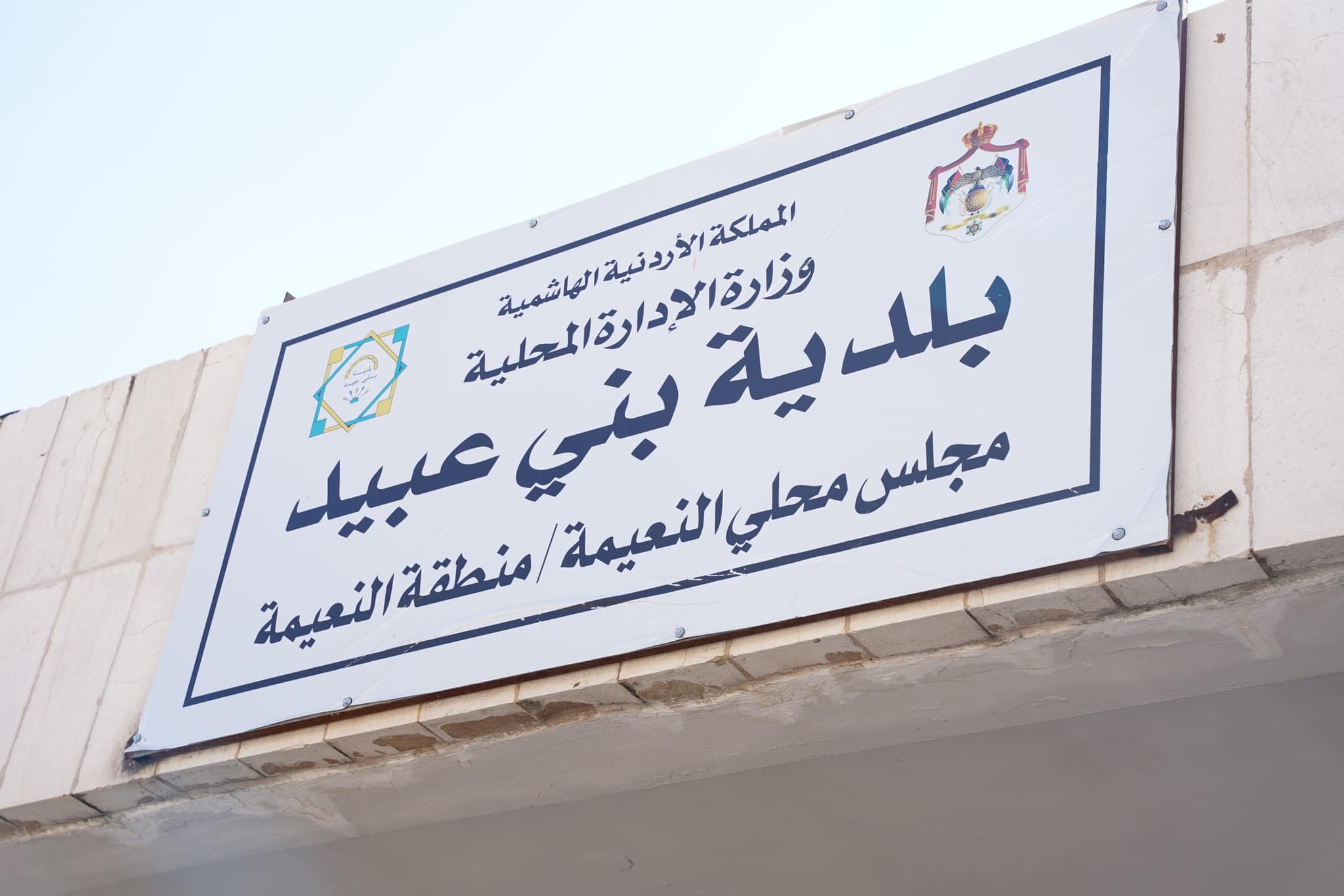
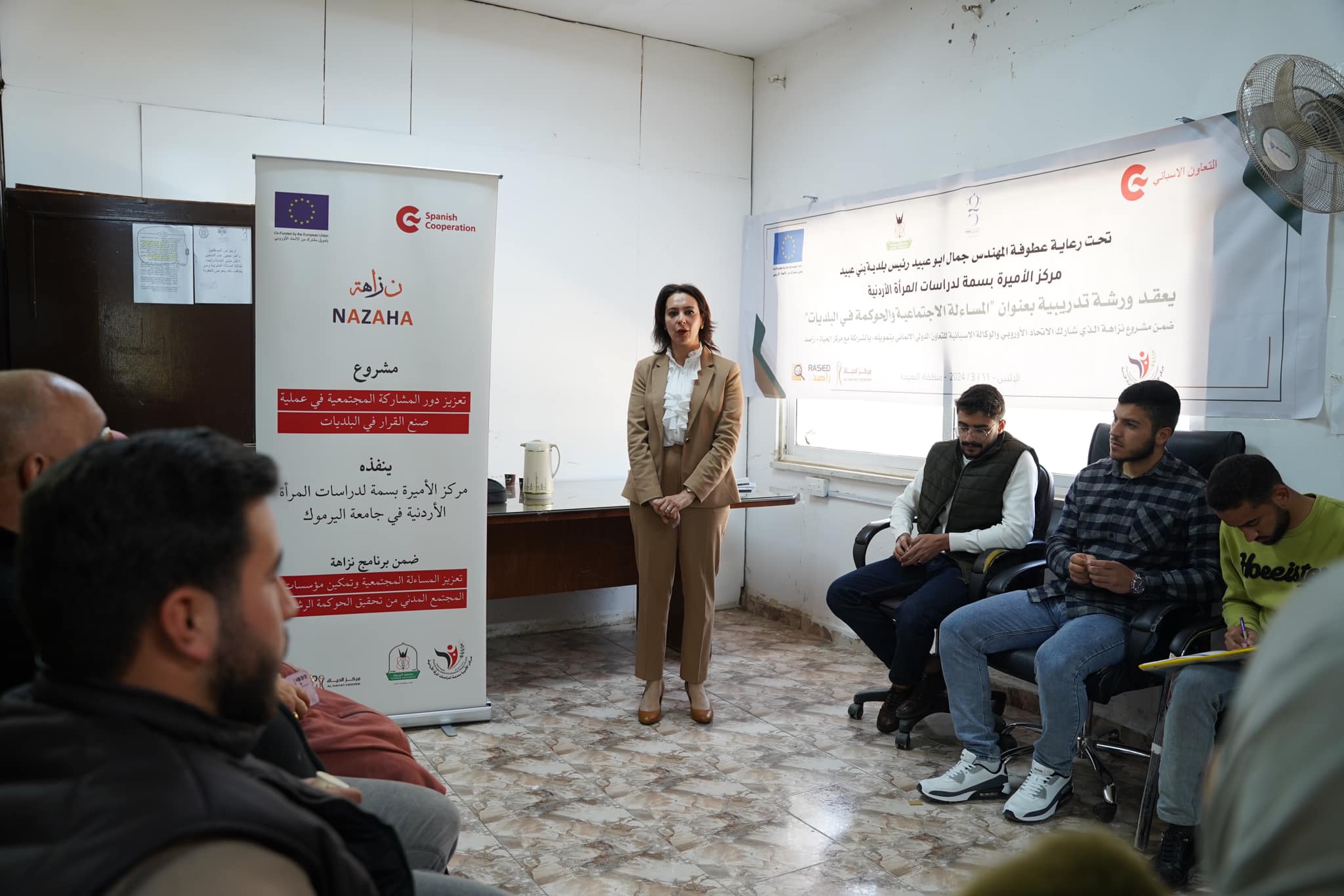
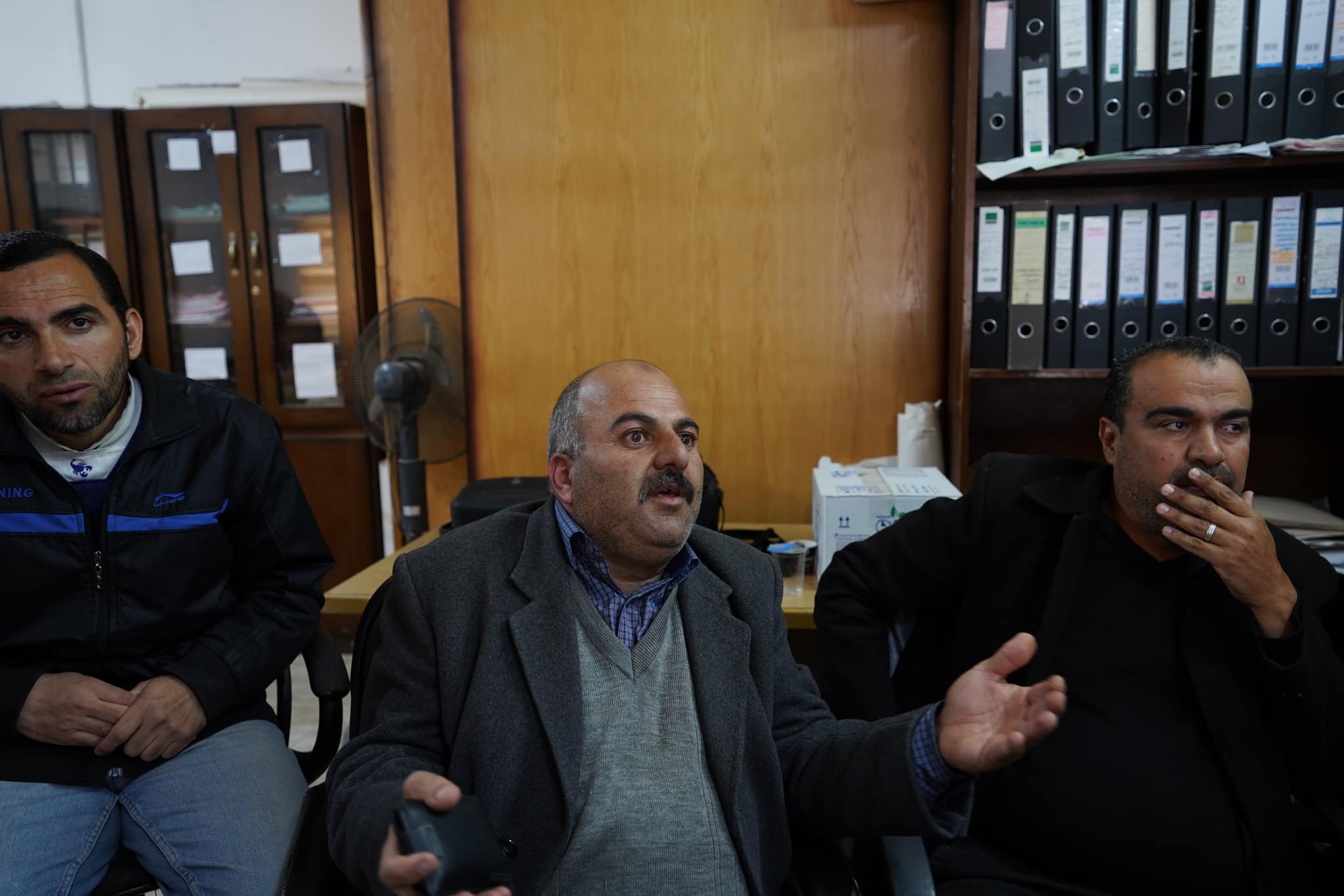
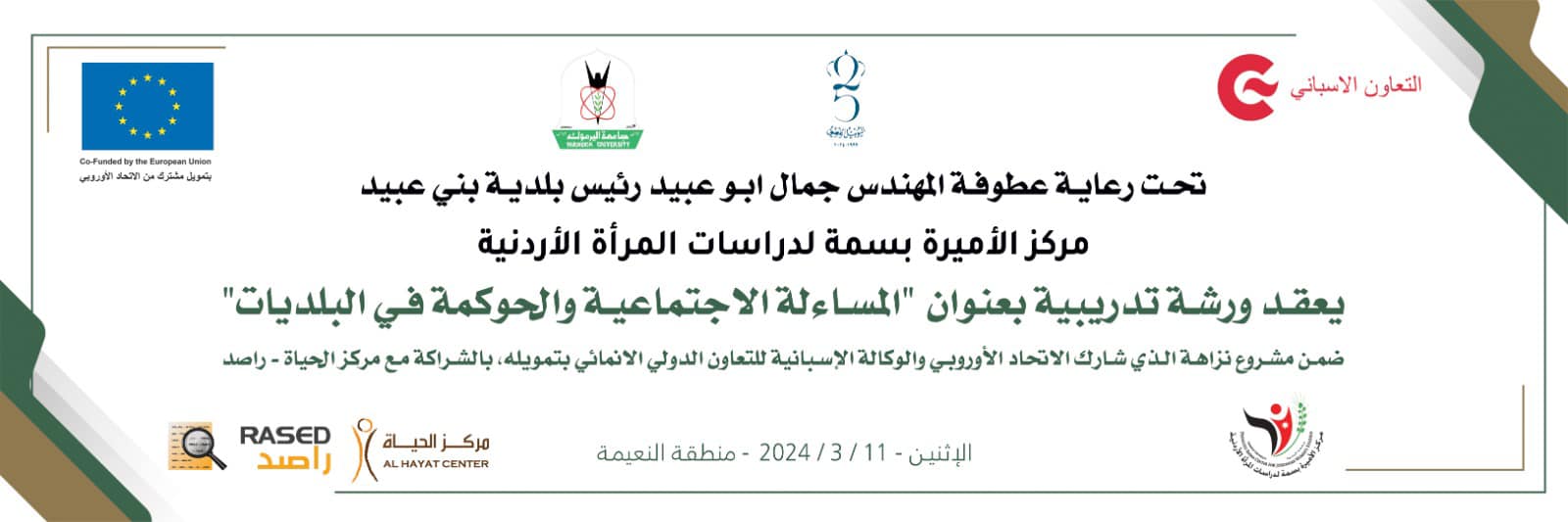
The Center, in collaboration with the Al-Hayat Monitor Center, conducted a training workshop titled Community Accountability and Governance in Municipalities in the Al-Naima area of Beni Ubaid Municipality as part of the Nazaha Project, which was funded by the European Union and the Spanish Agency for International Development Cooperation.
We appreciate the Municipality of Bani Ubaid for its support, as well as His Excellency Engineer Jamal Abu Ubaid, Mayor of the Municipality, for sponsoring Dr. Safaa Al-Sulami's workshop. Thank you.
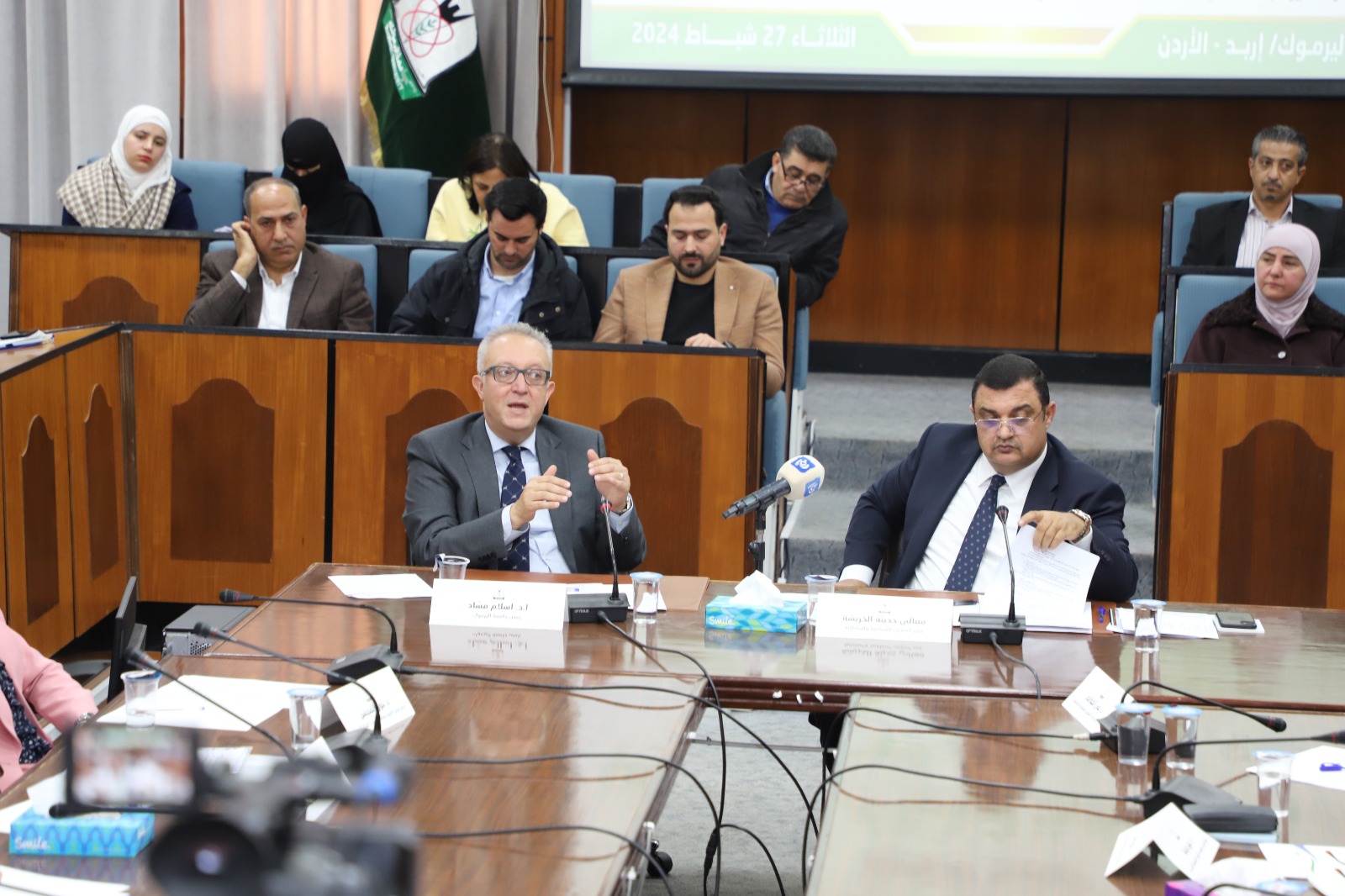
The Minister of Political and Parliamentary Affairs, Haditha Al-Kharisha, in the presence of the President of Yarmouk University, Dr. Islam Massad, sponsored the activities of the dialogue session entitled "The Reality and Challenges of Political Participation in Jordanian Society: Women and Youth as a Model," which was organized by the Princess Basma Center for Jordanian Women's Studies at the university in collaboration with the Association A Home for Political Participation.
According to Independent Election Commission statistics, Al-Khraisha believed that the silent majority had started to participate in the process and party life, noting that the number of party members was unprecedented, with more than 64,000 Jordanians affiliated with Jordanian parties.
He also said that there is no entity in the state accountable for parties, emphasizing that they are autonomous institutions under the constitution and that no institution or body may impose any program on any political party.
Al-Kharisha reassured Yarmouk University students that there is no reason to be concerned about partisan work, while also emphasizing that the ministry's programs are not concentrated in the capital but rather in the governorates and that we will go wherever we are invited.
According to al-Khraisha, the election legislation required Jordanians to vote on party-specific grounds, implying that political and partisan activity in Jordan is not new and that democratic life has been ingrained in the country from its inception.
It is one of the most significant advances in the political modernization system, particularly in terms of increasing young and women's involvement in party and political activities.
According to Massad, the significance of this conversation session stems from its discussion of a number of topics to which Yarmouk paid close attention, based on its goal and vision of promoting political engagement in the university and Jordanian society, particularly those affecting youth and women.
He added that "Yarmouk" views these two segments of our society as a fundamental pillar in the process of political modernization and national development led by His Majesty the King and His Trustworthy Crown Prince, because of their belief in the ability of these segments to bring about positive change in Jordanian society, and thus "Yarmouk" has established its vision in these issues, to be a lasting legacy, based on a set of national foundations that advanced
Massad affirmed Yarmouk's ongoing efforts to study the success factors, determinants, and challenges confronting youth, women, and communities and began working with a large group of teaching and administrative staff members, as well as students, to develop its intellectual project, which includes collaboration with many national institutions such as the Independent Election Commission, the National Center for Human Rights, and the Ministry of Social Affairs. Local society's political, legislative, and institutional components.
He continued: We at Yarmouk University are proud of the distinguished level of our students from all colleges and academic departments, and my feeling of positive energy deepens when I am among my students, who have known how to identify their strengths, enhance their motivations, and be able to develop their ideas, stressing that "Yarmouk" is in compliance with the directives of the Jordanian state, under the leadership of His Majesty the King, and is putting all of its capabilities and the advancement of its career, which includes the elite group of students who are most skilled and capable of representing their peers in the Union Council.
Massad emphasized that political maturity is required of us as universities in order to facilitate the tasks of organizing party activities within universities and raising students' awareness of the importance of political participation and its role in societal development through the regulations and instructions in place in universities, so that these activities do not interfere with the primary goal of universities, which is the educational and research process.
In terms of women, Massad revealed that the university issued new instructions to the Student Union, in line with best student electoral practices, while adding some privacy through some amendments represented by a "quota" system for female students, to ensure fair representation of female students in the council, in accordance with their percentage of students, and to meet the need for their presence in the council to represent issues related to female students specifically.
Dr. Abeer Al-Dababneh, a member of the Independent Election Commission's Board of Commissioners, confirmed that the human resource is the most important resource in Jordan and that women who have proven their competence and excellence in the academic and practical aspects occupy an advanced position and are an essential part of the components of this resource; however, there is a noticeable absence of them in contributing to pushing the wheel of production.
Al-Dababneh emphasized the importance of universities in providing venues and platforms for male and female students to express their opinions, as well as those who engage in political activities. She also emphasized the significance of colleges in developing the notion of a man and a woman in public affairs, stating that this concept is neither legitimate nor complete without an integrated legislative framework. In this context, the Jordanian Constitution came to emphasize the state's role in empowering youth and women, as well as the importance of fairness to them based on the principles of justice and equal opportunities, and the Election Law for the House of Representatives No. 4 of 2022 came to reflect this constitutional value by ensuring genuine participation of women and youth in elections and parties. The system for organizing party activities in higher education institutions came to emphasize this value, as well as the importance of universities in enhancing students' ability to practice party activities in a way that contributes to them fully exercising their active citizenship.
Dr. Reem Abu Dalbouh, the facilitator of the National Center for Human Rights, stated that Jordanian youth and women's political participation, whether through candidacy, election, or founding and joining parties, is a necessary criterion for practicing political work and has an essential role in the process of political modernization, noting that the approval of the parties and election laws with the constitutional amendments related to parliamentary work represents.
Abu Dalbouh praised the Princess Basma Center for Jordanian Women's Studies at Yarmouk University for conducting legislative studies to improve women's political participation and making recommendations on legislation, policies, and practices, as well as holding awareness, cultural, and training programs in this regard.
Dr. Batoul Al-Muhaisen, Director of the Princess Basma Center for Jordanian Women's Studies, stated that the theme of this dialogue symposium is a major topic of national development that the center seeks to empower without interruption, emphasizing the center's desire to embody its vision of supporting and empowering Jordanian women in various fields through collaborative efforts and units. University colleges and centers collaborate and network with civil society entities with the goal of sharing experiences and forming partnerships to improve women and youth's roles in social, economic, and political life.
Al-Muhaisen emphasized the center's ongoing efforts to empower a conscious generation to actively participate in political and civil life, encourage social patterns that support women's roles in the family and society, institutionalize the concepts of gender equality and equal opportunities at the level of public and private sector institutions, develop policy papers in common areas of work, and prepare scientific studies and sound research on Jordanian women.
Lawyer Areej Naseer, Director of the Watan Association for Political Participation, confirmed that Jordan has the means to increase the political participation of women and youth, based on royal directives to modernize the political system and amendments to the Constitution, Election Law, and Political Parties Law that promote this participation.
She emphasized that Jordanian youth are on the verge of new challenges and promising opportunities, and that encouraging youth participation in the electoral process is not only a democratic right but also a responsibility to our country and future generations.
Zakir Al-Zaghoul, a member of the Watan Association, confirmed that the Royal Commission to Modernize the Political System presented a package of reforms through the laws governing the political process. He explained that these laws and amendments reduced the age for candidacy in Jordan from 30 to 25 years and mandated that at least 20% of party members be young, requiring a young man to be among the first.
He emphasized that the system for conducting political activities in higher education institutions granted students the ability to engage in partisan activities on their campuses without restriction. It also gives students the freedom to participate in political activities on campus through clubs, unions, or groups within such institutions, including those related to party and election awareness.
Dr. Tariq Al-Nasser, Deputy Director of the Princess Basma Center for Jordanian Women's Studies, moderated the session, which ended with a long discourse and discussion about the issue and the thoughts and perspectives presented.
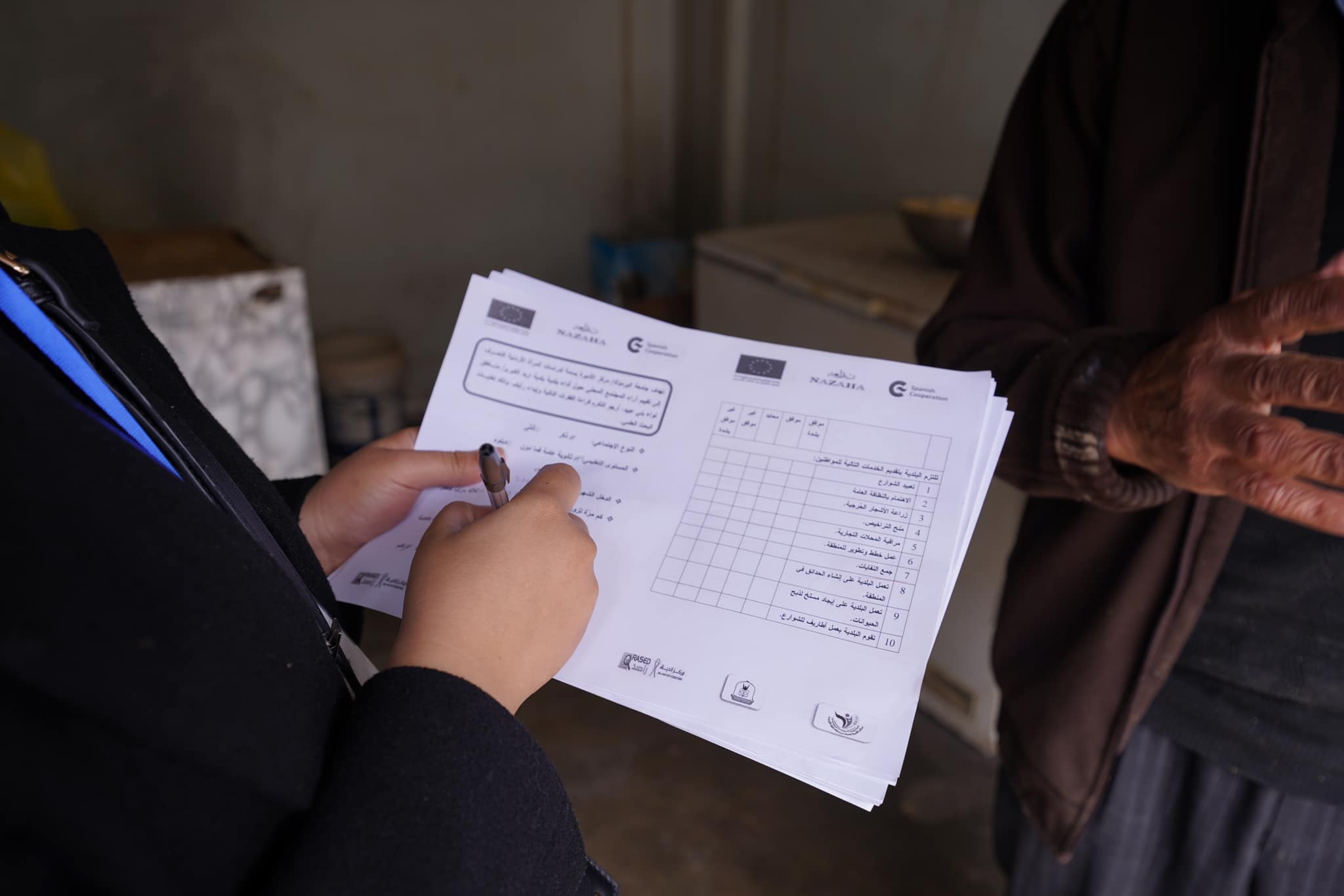
This is the second day of our field research volunteer training program.
We are fully committed to completing our objective in the field, and we want to assure them of our unwavering confidence in our cause..
Professor Dr. Munira Al-Sharman expertly spearheads this endeavor, which is part of the Integrity Project initiative of the Center and the Al-Hayat Rased Center to increase citizen engagement in local government. The initiative receives funding from the EU and the Spanish Agency for International Development Cooperation.
Jordan Monitor _ RASED Jordan
AECID Jordan
AECID
European Union in Jordan
Yarmouk University
Princess Basma Center for Jordanian Women's Studies/Yarmouk University
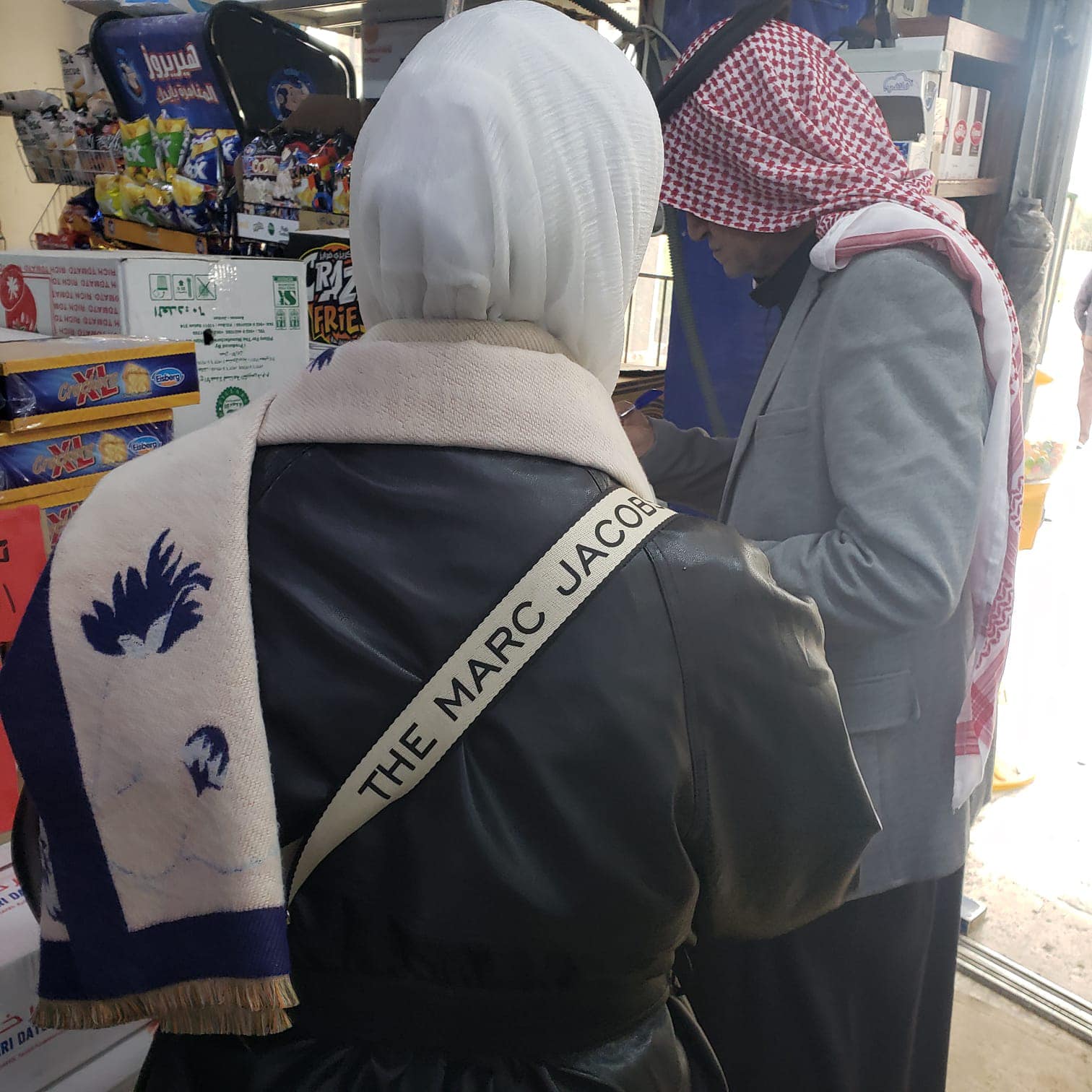
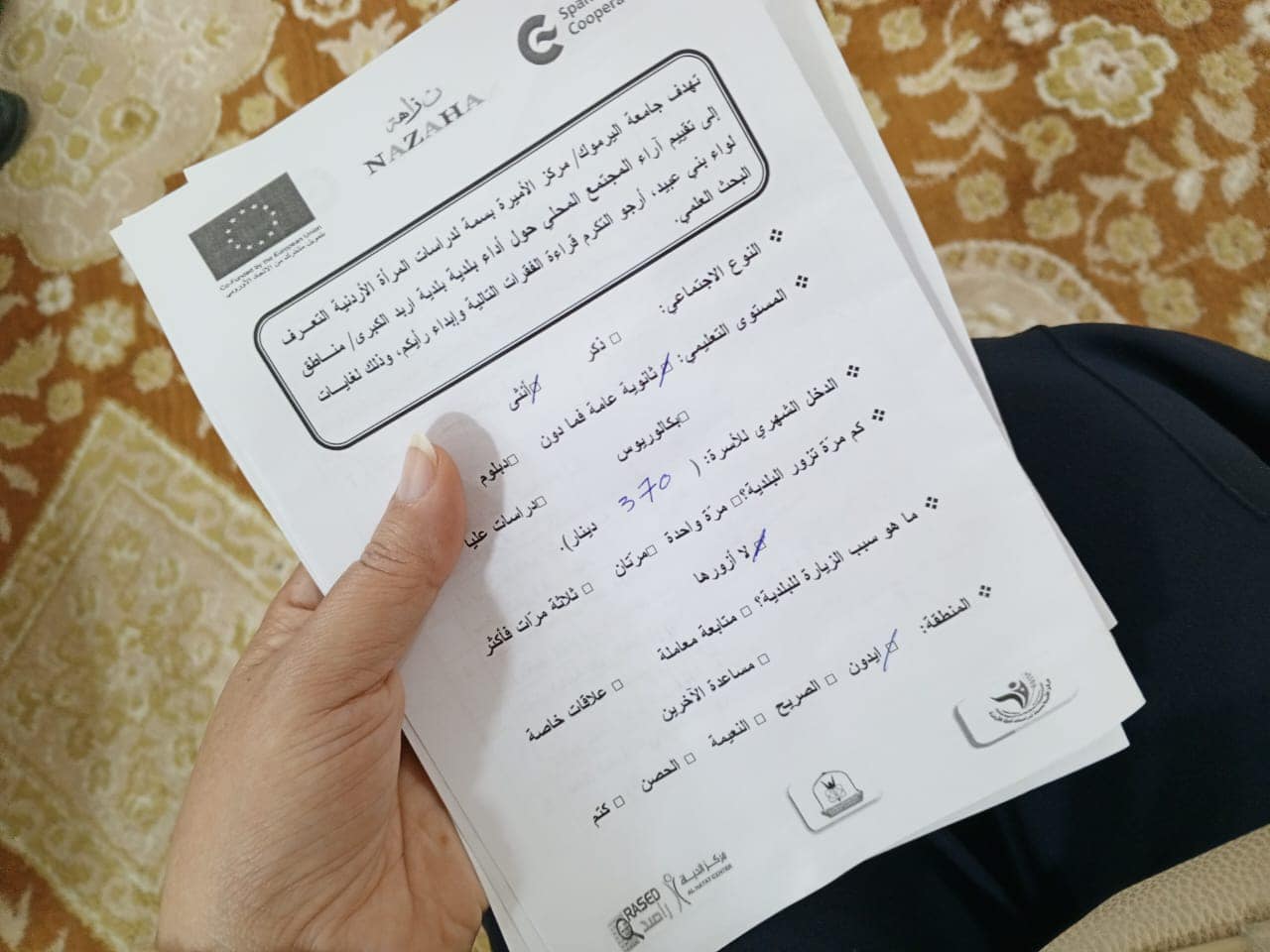
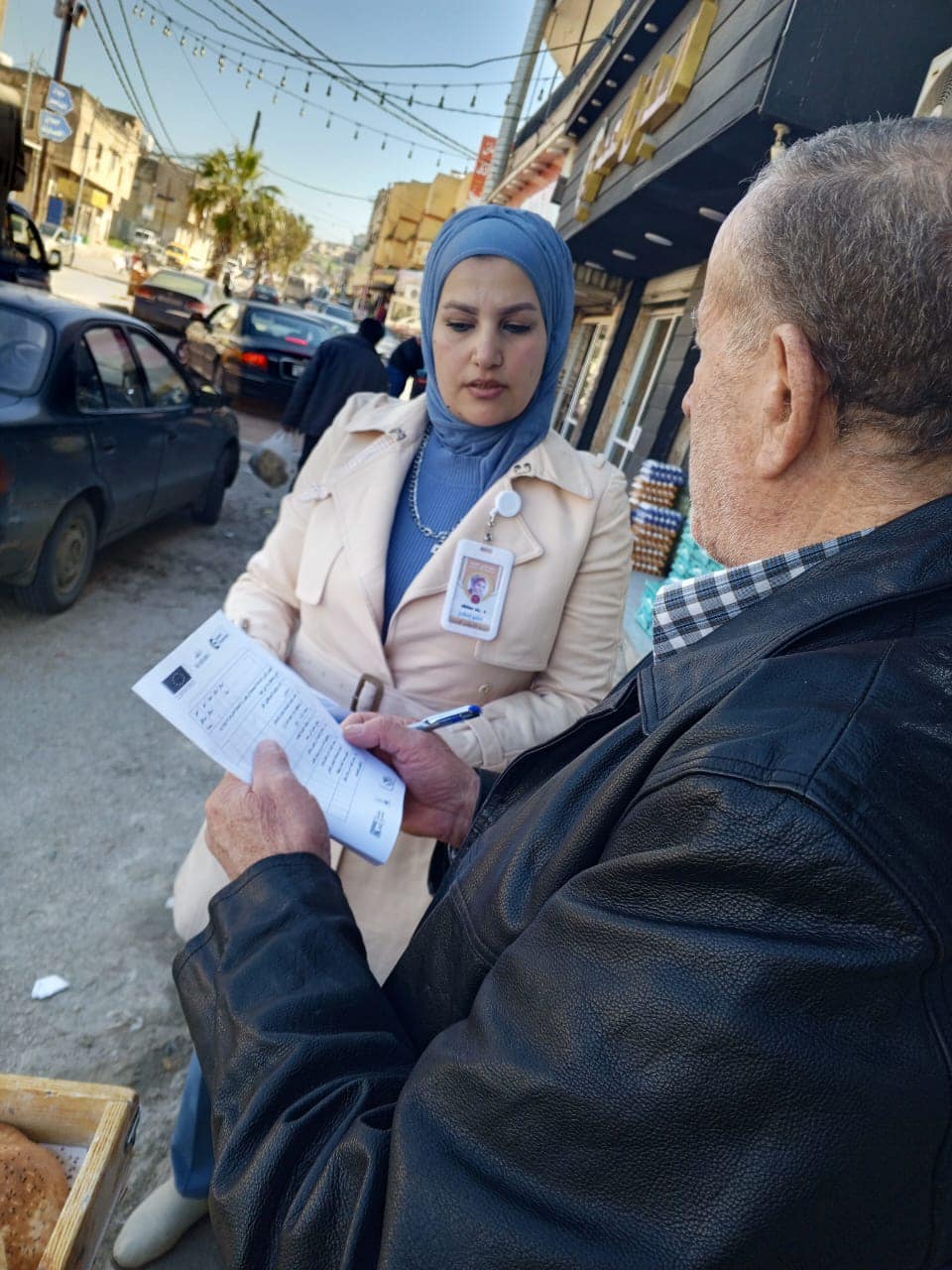
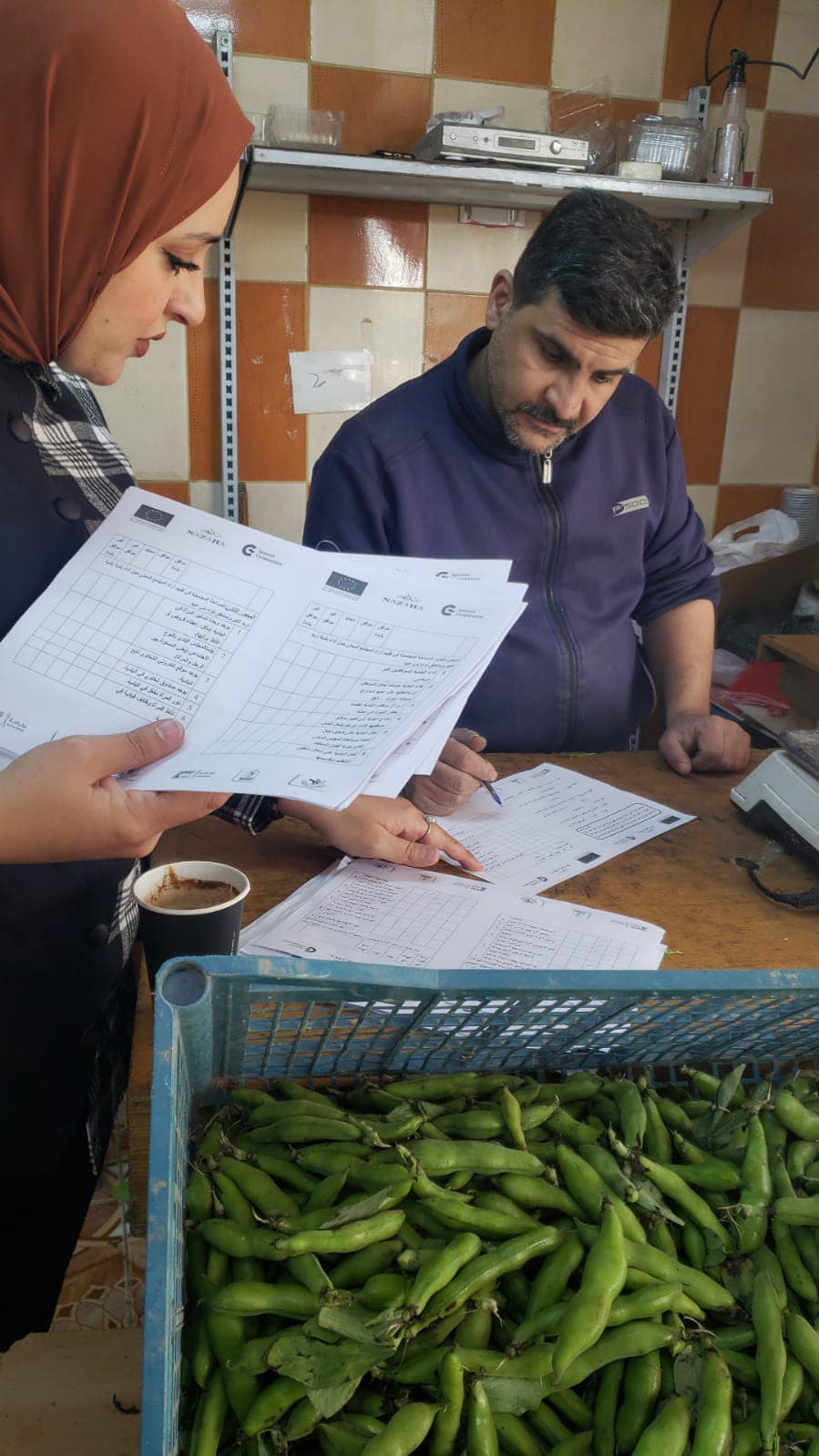
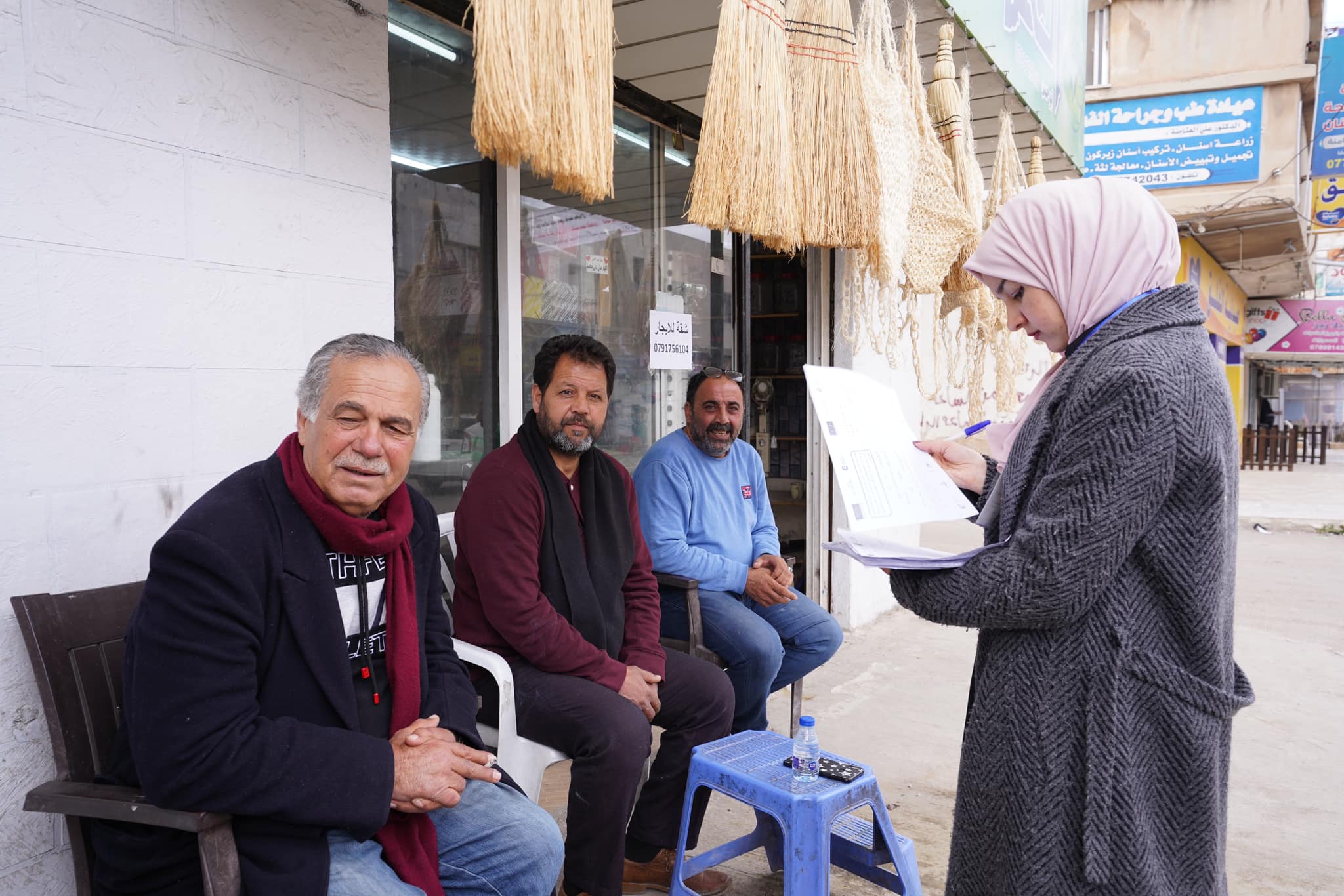
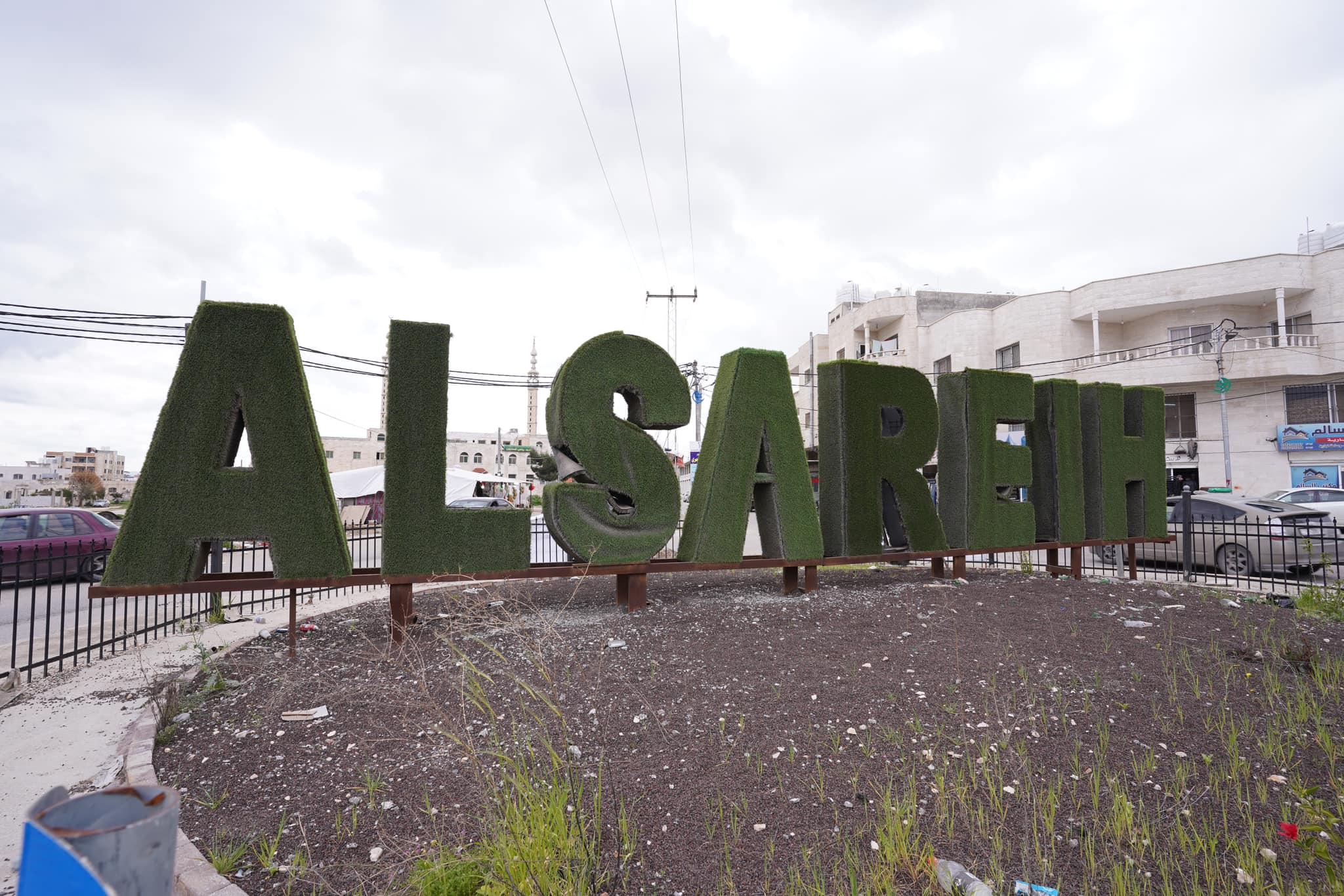
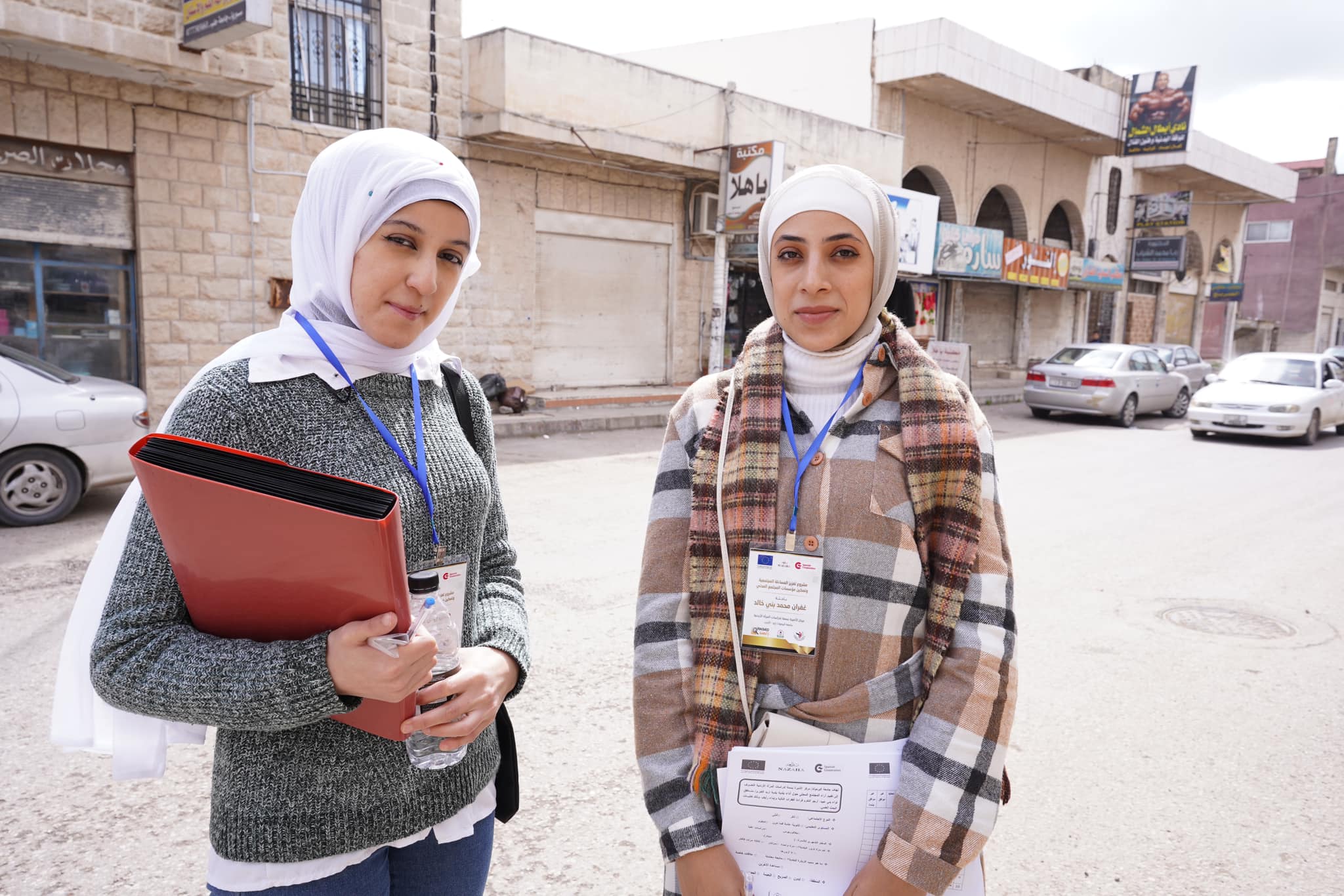
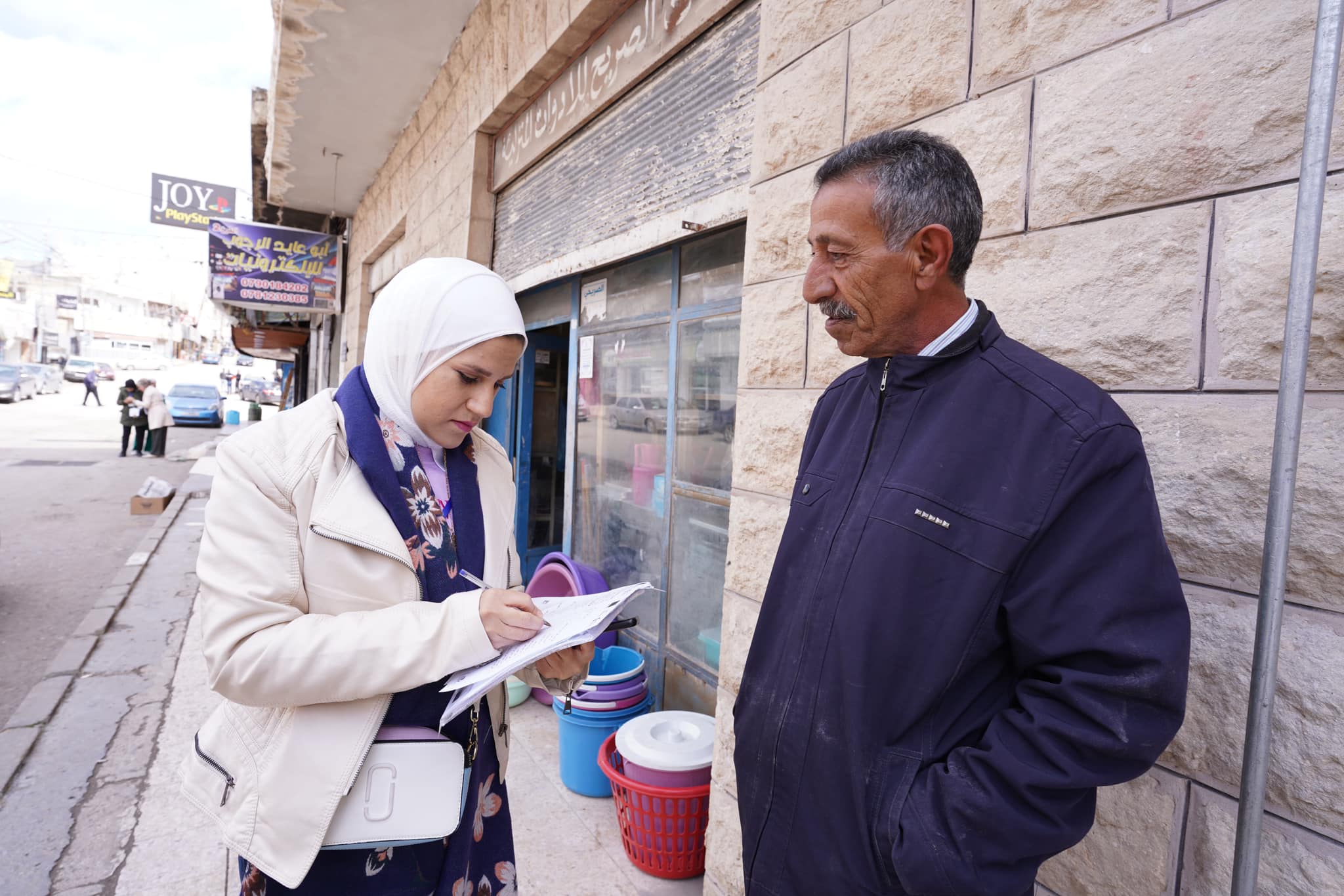
The Princess Basma Center for Jordanian Women's Studies at Yarmouk University, in collaboration with the Hayat Rased Center and with financial support from the Spanish Agency for International Cooperation and the European Union, is implementing a research project in the Bani Ubaid municipality. The project aims to strengthen community accountability and empower civil society institutions to encourage good governance. The project is being led by competent female researchers from the center.
March 8th, the day before yesterday, marked International Women's Day, a day to acknowledge and value women's roles in society and their contributions to sustainable development and modernization processes across various disciplines. Remember, the United Nations first recognized and celebrated this day in 1977, following its first observation in 1909, highlighting the importance, status, and presence of women in international and global forums, along with their remarkable contributions that have yielded positive results in every field they have worked in.
Their Majesties King Abdullah II Ibn Al Hussein and Her Majesty Queen Rania Al-Abd prioritized Jordanian women's affairs in the Hashemite Kingdom of Jordan. They provided various forms of support and care, which paved the way for Jordanian women to achieve numerous recognized achievements. These achievements included reaching the dome of Parliament and actively participating in decision-making. They occupy key roles in governments, ministries, and both public and private entities. They have shown a strong presence in Jordan and abroad in the domains of work in women's and development groups, economic participation, and quality and originality in scientific disciplines. Academic, artistic, and journalistic, and what is striking is that His Majesty the King has made explicit references in all of the royal mandate books to the importance of providing a stimulating environment that allows women to unleash their creative energies, which has aided efforts to improve the Kingdom's construction, development, and progress.
His Majesty the King has often emphasized the necessity of women's involvement in the Kingdom's growth and modernization initiatives at all levels, including politics, economy, and culture. His Majesty believed that the Jordanian lady was and continues to be a model of generosity and excellence. He expressed his support and confidence in Jordanian women's ability to excel and be creative in a variety of fields, as well as his pride in Jordanian women's determination, accomplishments, and insistence on being an active member of society in every meeting with Jordanian women from our Jordanian society.
The Jordanian lady represents success, steadfastness, and the resolve to overcome difficulties and hurdles with energy and tenacity in order to attain success. She is a mother, a teacher, a doctor, an engineer, a director, and an educator who instilled in the people of the country a love for Jordan and a sincere sense of belonging. She is also the one who created glory, heroism, and dignity, calling on all of us to continue calling on national institutions to express themselves, to magnify the status of women, and to work to make more room for them to take the reins of the path of goodness and raise their children.
During successive stages of His Majesty's Hashemite discussion papers, Jordanian women were present, emphasizing gender equality, equal opportunities, justice, and the importance of women's participation alongside men in the nation's construction and development, as well as their role as partners in democratic work. Over the years, this has increased. The percentage of women's representation and participation in parliamentary, municipal, and decentralized councils has consistently increased. This is due to laws that support women's access to legislative power through women's quota and competition systems. Additionally, Jordanian women have become involved in party life, rising to positions of leadership such as Secretary-General or members of the party's executive office or executive committee.
I must mention the Princess Basma Center for Jordanian Women's Studies, which I have the privilege of managing at Yarmouk University. It receives direct support from the university administration, which believes in the role of women and the importance of enabling them to develop their roles. In translation, we continue and reaffirm on this occasion to work on everything that will create a climate conducive to women carrying out their job and achieving all they are capable of in every part of our glorious national path, God willing, and with the patronage of His Majesty the King.
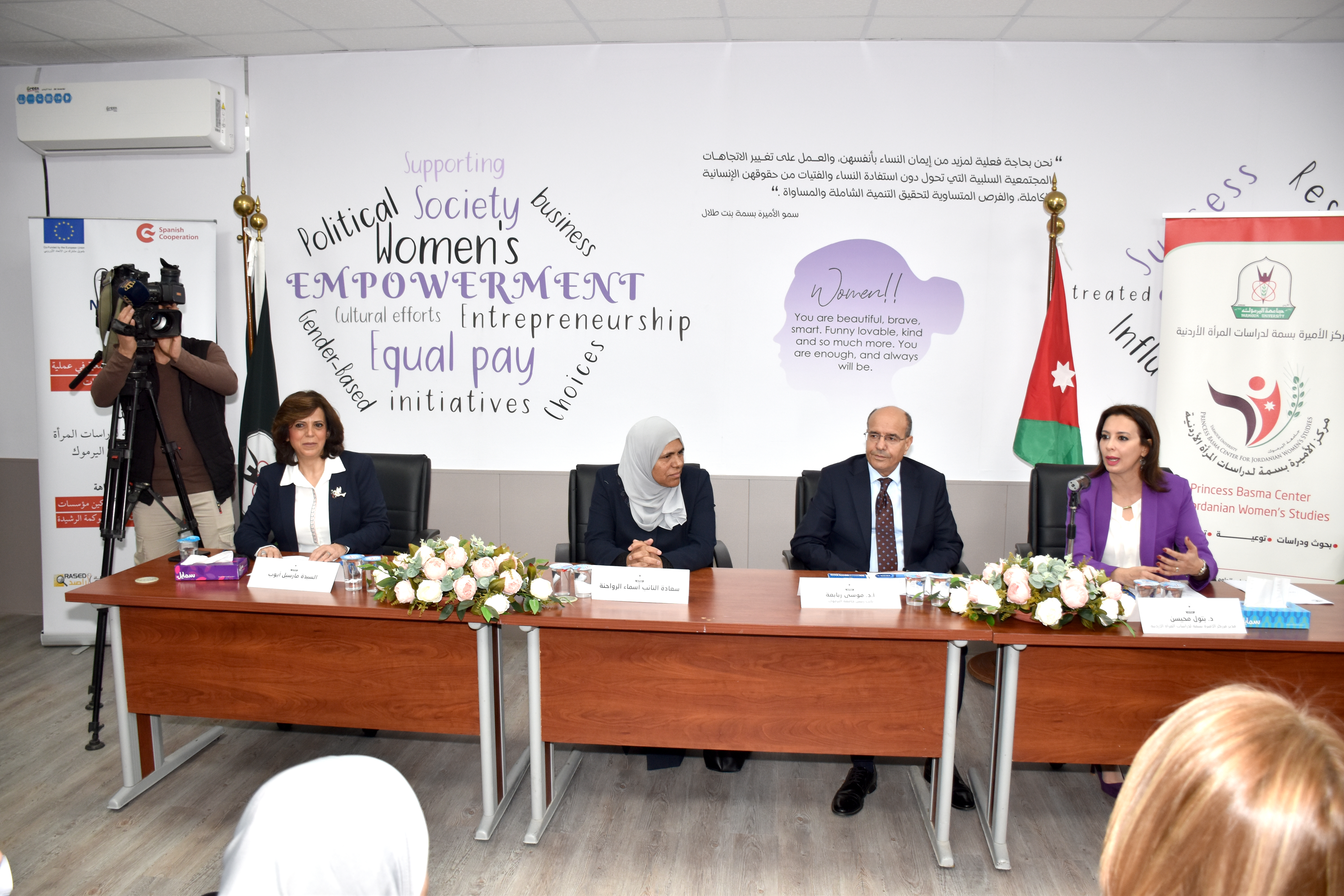
The Princess Basma Center for Jordanian Women's Studies at Yarmouk University organized the dialogue symposium "The Role of Women in Elected Councils in Political Empowerment and Community Accountability" as part of the "Integrity: Promoting Community Accountability and Empowerment" project. Dr. Musa Rababah, VP of the University for Academic Affairs and representative of the president of Yarmouk University, sponsored the opening of the activities. "Investment in civil society institutions for good governance," financed by the European Union Delegation to Jordan and the Spanish Agency for International Cooperation and Development.
Members of the Irbid Governorate Council Lilas Al-Dalqamuni and Rula Batayneh, MP Asma Al-Rawahneh, head of the Jordanian Women Parliamentarians Forum, and MP Dr. Sabah Al-Dardour attended the symposium.
In his speech, Rababa emphasized that Yarmouk has a rich history of strong female representation in leadership roles, something of which the city can be justifiably proud. He went on to say that the Hashemite dynasty encouraged Yarmouk's female residents to carve out successful careers, and that these women helped push the country forward in many other areas as well.
He emphasized that the Princess Basma Center for Jordanian Women's Studies is committed to supporting, empowering, and enhancing Jordanian women at all times and that universities should take the lead in undertaking research that helps women succeed in life.
Rababa said that Jordanian women's rise to their rightful place is a direct result of His Majesty King Abdullah II's plans to update the country's governmental structure and empower Jordanian women to fulfill their full potential in all spheres of society.
Under the auspices of His Majesty the King and His Highness the Crown Prince, the Center's director, Dr. Batoul Al-Muhaisen, emphasized that the center's primary mission is to empower and assist Jordanian women in all aspects of life.
Women have become a symbol of excellence, achievement, political empowerment, and societal accountability, she said. Today's symposium is here to discuss a major topic of national development: the elected councils that represent our democratic identity. She went on to say that groups that need empowerment are not weak or marginalized; rather, they can take advantage of opportunities if given them and can build and give regardless of the circumstances.
"The role of female parliamentarians in political empowerment and societal accountability" was one of several subjects covered during the conference. "Women in municipalities and the integration of community roles to achieve effective partnership" and "[The role of governorate councils in empowering women to exercise their service roles and enhancing community participation]."
Women make up half of society and are responsible for raising and caring for the other half; thus, it is crucial that they be empowered, MP Al-Rawahna said at the symposium. Political issues, seen as the foundation for advancing women's representation in decision-making roles, require her to be well-versed. She should also understand the significance of "empowerment," which entails designing programs specifically tailored to Jordanian society and its distinctive features. These programs should educate women about the laws and empower them to hold their lawmakers and bureaucrats to account.
She went on to say that governorate councils are crucial to local development, that women should be active in political parties, and that parties and party programs are important.
Rep. Al-Dardour echoed this sentiment, stating that initiatives aimed at empowering women should cover all bases and address women's participation in society, politics, the environment, education, and the economy. She also emphasized the significance of conducting research and development projects with a focus on women to help them achieve their full potential.
Al-Batayneh asserts that elected councils should not view women's political empowerment as an independent issue, but rather as an integral part of their work. She went on to say that there are many different aspects of women's empowerment and that these aspects must coordinate with one another in a way that is compatible with priorities and needs identification in order to benefit political work.
She emphasized that women in Jordan have made progress toward political empowerment, but that there is room for improvement and that the key is for society as a whole to share experiences, information, and skills in order to prevent provincial councils from isolating themselves and instead relying on collaborative efforts between institutions and individuals. Growing up in a Jordanian family ensures a head start, which is particularly important given that the country is following a political party-based road map.
According to Al-Dalqmouni, Jordan has been and continues to be actively working to raise women's status in all areas of society, including politics, economics, and culture. She highlighted that the past few years have been encouraging for women's participation in public and political life, thanks to the goals set by His Majesty the King and his encouragement and support of women. The royal discussion papers, particularly the fourth and seventh articles, made it clear that they were Jordanians.
Achieving justice and gender equality in rights and opportunities, she emphasized, requires a quantum leap. She also emphasized the significance of women believing in themselves and working to change cultural norms and social trends that limit women's ability to exercise their rights.
As Al-Dalqamuni pointed out, the reform process cannot move forward without achieving political reform, which starts with the active engagement of citizens (both sexes) in decision-making, execution, and confronting problems, particularly economic ones... This is the foundational pillar of sustainable development and comprehensive reform.
It is noteworthy that the participation of the Princess Basma Center for Jordanian Women’s Studies in the “Integrity” project comes within the “Enhancing Community Accountability in Municipalities” segment, which aims to achieve good governance and the principles of transparency and integrity in municipalities, and to identify mechanisms for increasing the participation of citizens, women, and marginalized groups in decision-making and holding municipalities accountable for... The services provided to them, and clarifying the role of women, youth and the elderly in community participation and accountability to municipalities in a way that ensures that they fulfill their basic needs and meet their constitutional rights, and work to build the capabilities of employees and develop their performance in municipalities, and learn about the role of municipal councils in serving citizens, in order to achieve a number of goals such as enhancing Participation of women, youth and the elderly in community accountability of municipalities, and improving the performance of municipal employees.
Representing the President of Yarmouk University, Dr. Musa Rababah, Vice President of the University for Academic Affairs, sponsored the opening of the activities of the dialogue symposium “The Role of Women in Elected Councils in Political Empowerment and Community Accountability,” which was organized by the Princess Basma Center for Jordanian Women’s Studies at the University within the “Integrity: Promoting Community Accountability and Empowerment” project. Civil society institutions to achieve good governance” funded by the Spanish Agency for International Cooperation for Development - the European Union Mission in Jordan.
The chair of the Jordanian Women Parliamentarians Forum, MP Asma Al-Rawahneh, MP Dr. Sabah Al-Dardour, and members of the Irbid Governorate Council, Lilas Al-Dalqamuni and Rula Batayneh, participated in the symposium activities.
In his speech, Rababa stressed that Yarmouk has highlighted, in its history, a great presence of women in all positions and fields, which we can only be proud of and cherish, stressing that, with the support of the Hashemite leadership, she was able to chart her path with ability and success, and contributed to the advancement and development in the political, social, economic, educational and other fields.
He stressed that the Princess Basma Center for Jordanian Women's Studies always seeks to support, empower, and enhance Jordanian women, stressing the need for universities to assume responsibility for conducting studies that advance women, develop their capabilities, and meet their ambitions on an ongoing basis.
Rababa pointed out that Jordanian women have been able to achieve the status they deserve, based on the visions of His Majesty King Abdullah II to modernize the political system so that Jordanian women can carry out their renaissance role in all aspects of life.
The Center's director, Dr. Batoul Al-Muhaisen, stressed that supporting and empowering Jordanian women in various fields is the center's work and the main goal it seeks to achieve, guided by the directives of His Majesty the King and His Highness the Crown Prince.
She pointed out that today's symposium comes to discuss a major topic of national development, which is the elected councils that represent our democratic identity, noting that women have become a symbol of excellence, achievement, political empowerment and societal accountability, in which we see a qualitative administrative approach to empowering groups that need empowerment, not because they Weak or marginalized, but because they are able to take advantage of opportunities if they are given them, and because they are able to build and give, regardless of the circumstances.
Within the symposium’s activities, several topics were discussed: “The role of female parliamentarians in political empowerment and societal accountability,” “The role of governorate councils in empowering women to exercise their service roles and enhancing community participation,” and “Women in municipalities and the integration of community roles to achieve effective partnership.”
During the symposium, MP Al-Rawahna stressed the importance of empowering women, as they represent half of society in numbers and raise and care for the other half. She must have knowledge of political issues, which are considered the basic structure that will lead to a deeper and greater build-up in women’s access to decision-making positions, noting that “empowerment “Through which specialized, clear and carefully prepared programs are developed that are appropriate to the nature and environment of Jordanian society, such that these programs make women fully aware of the laws and enable them to hold accountable those who make these laws and those who implement them.
She stressed the importance of parties and party programmes, the need for women to participate in parties, in addition to the importance of governorate councils in serving local development.
In turn, Representative Al-Dardour stressed that programs targeting women and their empowerment must be purposeful and comprehensive programs for the various aspects of social, political, environmental, educational and economic life, as well as the importance of implementing development projects and research studies that target women and positively impact the empowerment of women in their various roles.
While Al-Batayneh explained that the political empowerment of women is considered one of the important areas of work in elected councils and is not separate from other areas, noting that the areas of empowerment are multiple and need to work together and in a compatible manner that is consistent with priorities and identifying needs, which serves political work.
She stressed that political empowerment requires the transfer of experiences, knowledge, and skills among members of society so that the provincial councils are not closed in on themselves, but rather rely on participatory work between institutions and individuals, pointing out that women in Jordan have taken good steps in political empowerment, but they need to be strengthened. Raising up in Jordanian families so that you are in the first ranks, especially since Jordan is now on a new road map that is based on political parties.
For her part, Al-Dalqmouni said that Jordan has made and is still making clear efforts to improve the status of women at the policy and legislative levels as well as the social, economic and cultural fields, pointing out that recent years have become promising for the presence of women in political and public life, based on the visions of His Majesty the King and his encouragement and support for women. Jordanian, and this was evident in the royal discussion papers, especially the fourth and seventh papers.
She stressed the need to achieve a qualitative leap in achieving justice and gender equality in rights and opportunities, stressing the importance of women believing in themselves, and for women to work to change societal trends and culture that play an important role in restricting women and not enabling them to benefit from their rights.
Al-Dalqamuni pointed out that political reform is the basic pillar of sustainable development and comprehensive reform, and the reform process cannot proceed without achieving political reform, which begins with the active participation of citizens (men and women) in the decision-making process, its implementation, and confronting challenges, especially economic ones.
It is noteworthy that the participation of the Princess Basma Center for Jordanian Women’s Studies in the “Integrity” project comes within the “Enhancing Community Accountability in Municipalities” segment, which aims to promote good governance and the principles of transparency and integrity in municipalities, and to identify mechanisms for increasing the participation of citizens, women, and marginalized groups in decision-making and holding municipalities accountable for... The services provided to them, and clarifying the role of women, youth and the elderly in community participation and accountability to municipalities in a way that ensures that they fulfill their basic needs and meet their constitutional rights, and work to build the capabilities of employees and develop their performance in municipalities, and learn about the role of municipal councils in serving citizens, in order to achieve a number of goals such as enhancing Participation of women, youth, and the elderly in community accountability of municipalities, and improving the performance of municipal employees.
The Princess Basma Center for Jordanian Women’s Studies at Yarmouk University is an academic and research center dedicated to women’s empowerment. It conducts studies and training programs, supports national policies, and promotes women’s participation through local and international partnerships.